Forgot your customer ID? Click here
Hello!
You’re about to visit our web page in English
Would you like to continue?
If this is not what you’re looking for,

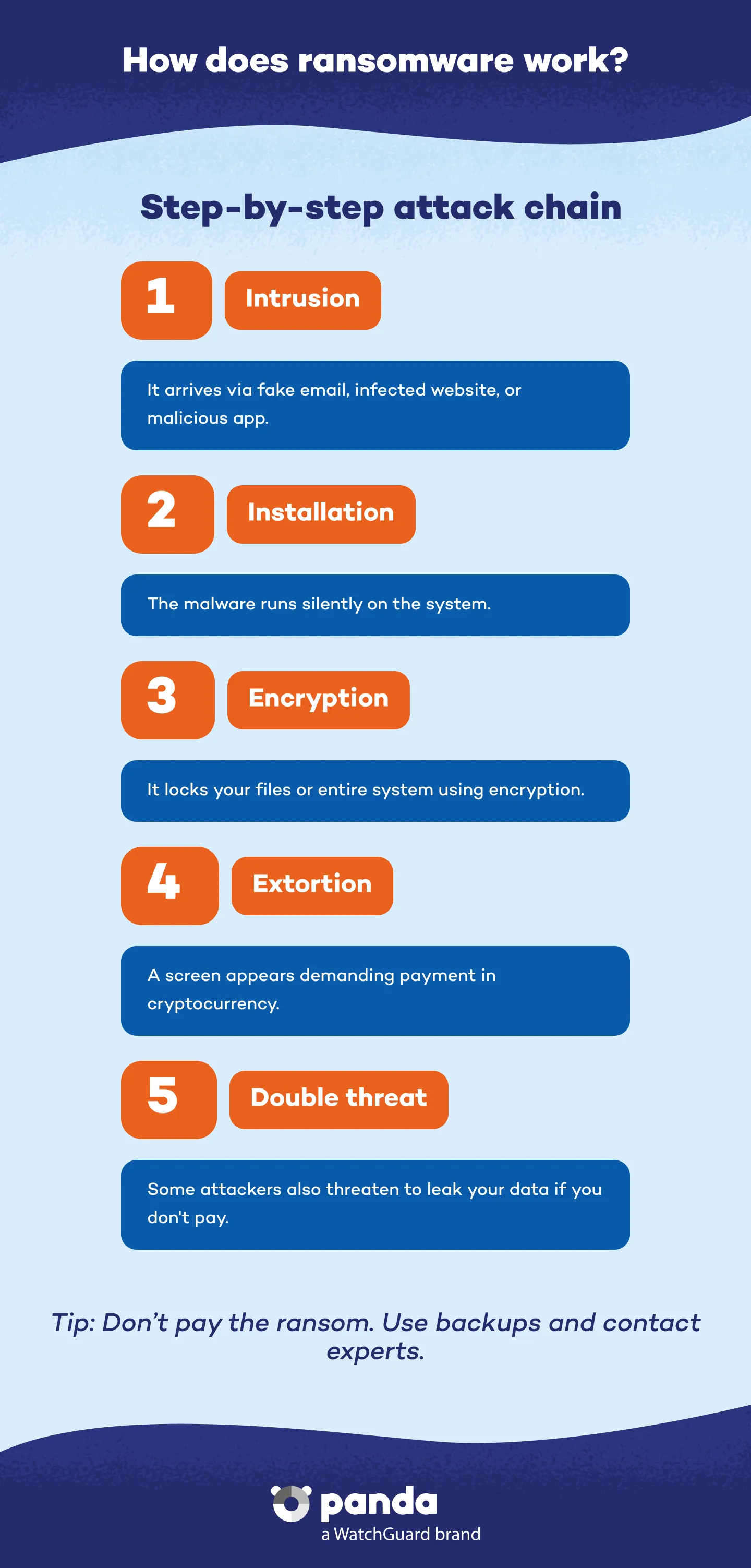
Ransomware is defined as any type of malware that blocks access to files or systems, demanding a ransom (usually in cryptocurrencies) in exchange for releasing them. It is usually spread through phishing campaigns, malicious downloads, or by exploiting system vulnerabilities. Attacks target anyone, from individual users to large companies or public institutions. Cybercriminals often set a deadline, threatening to delete data if payment is not made on time.
Ransomware usually follows a common attack pattern:
In many cases, attackers use a second extortion technique, threatening to publish confidential data if the ransom is not paid.
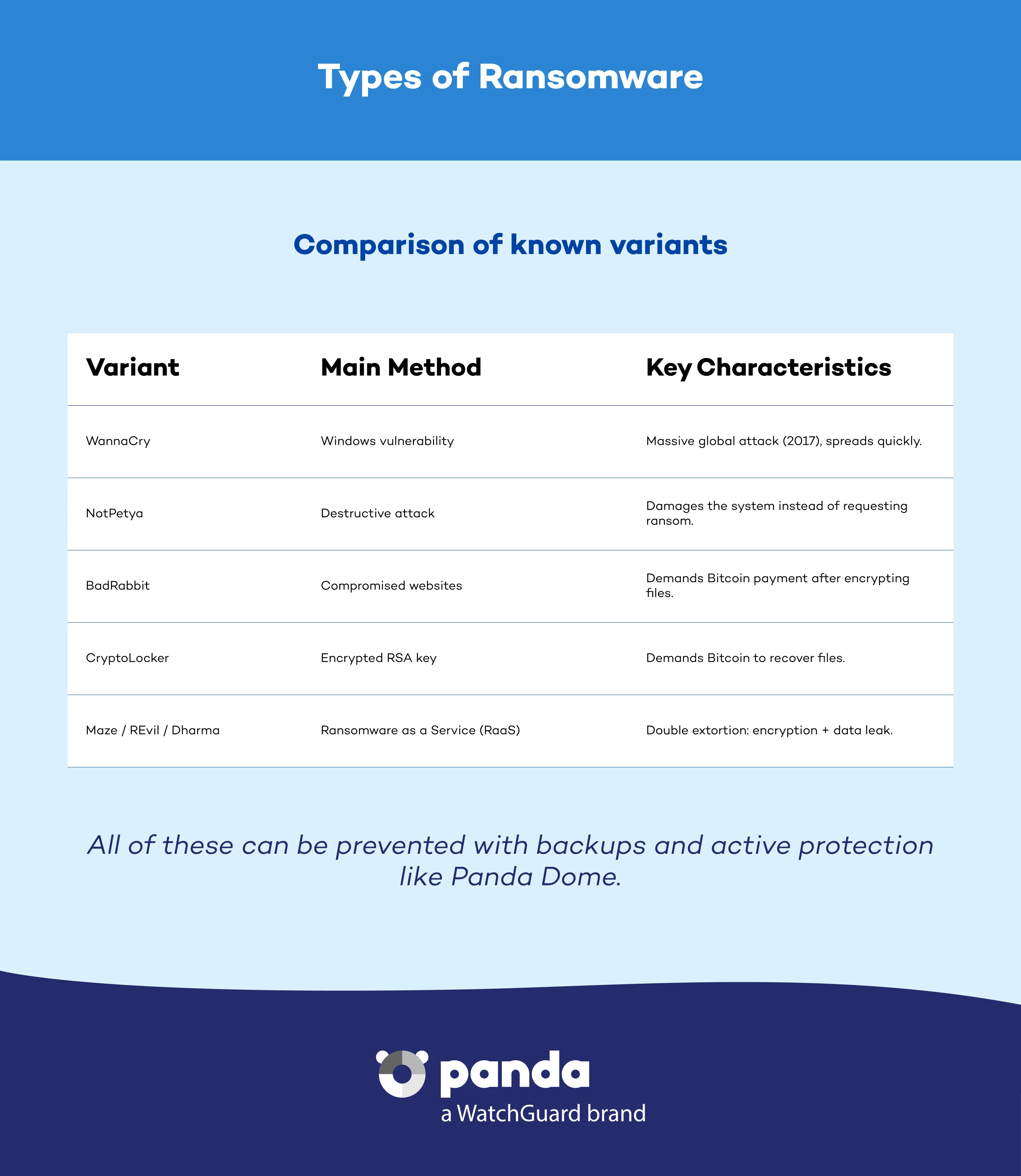
Ransomware attacks have diversified over time. Here are some of the best-known variants:
In 2017, the WannaCry ransomware caused one of the biggest cyberattacks in history, after spreading rapidly, and affecting numerous organizations worldwide. It hit hospitals, factories, and public services across more than 150 countries, exploiting a Windows vulnerability known as EternalBlue, developed by the NSA and leaked on the Internet.
NotPetya was particularly destructive. It masqueraded as ransomware, though its main goal was to inflict massive damage, affecting critical infrastructure. Instead of encrypting files, it encrypted the master boot record (MBR), rendering systems unusable.
This ransomware spread through compromised websites, encrypting files and demanding payments in Bitcoin.
CryptoLocker used RSA encryption keys to lock files and demanded payment in Bitcoin for their recovery.
These are part of a new generation of ransomware-as-a-service (RaaS), where developers sell their tools to affiliates who carry out the attacks. This has made ransomware accessible even to cybercriminals with little technical expertise.
Recent research has revealed that hacker groups use emerging countries as testing grounds to perfect ransomware attacks before deploying them in more developed regions. This allows them to detect weaknesses, measure the effectiveness of the malware, and refine their methods of propagation.
To prevent ransomware infections, it is advisable to:
Panda Security offers advanced solutions to protect against ransomware. Discover how Panda Dome protects you from ransomware with cloud protection technology, smart firewall, behavior analysis, and automated backups.
The most common methods are:
Discover the Panda Dome plan that best fits your needs
You can take a look to every single product page (Panda Dome Essential, Panda Dome Advanced, Panda Dome Complete and Panda Dome Premium) or compare all our plans to take a decision.
Digital security is everyone's responsibility. With the right information and tools, you can reduce risks and use the Internet with peace of mind. Explore our guides and protect your online privacy.
Glossary
Easy-to-understand definitions for common cybersecurity terms and topics.
Blog Panda Security
Discover expert advice, detailed tips, and the latest cybersecurity news.

Panda Security, a WatchGuard Technologies brand, offers the most advanced protection for your family and business. Its Panda Dome range provides maximum security against viruses, ransomware and computer espionage, and is compatible with Windows, Mac, Android and iOS.