Cyberbullying

What Is Cyberbullying?

Cyberbullying is a form of digital violence in which the victim is subject to insults, threats, identity theft, or the spreading of harmful content across the Internet or through electronic devices. These types of attacks, which are more common among children, teenagers, or those belonging to vulnerable sectors of society, can have lasting effects on an individual’s self-esteem and emotional well-being, and may even trigger self-destructive behavior.

Try Panda Dome for:Windows | Android | Mac | iOS

Why Is Cyberbullying a Growing Problem?

Social media, which accounts for more than 50 percent of victims, has become one of the main scenarios for these types of threats. Yet they are also sent through messaging apps such as WhatsApp or email. Such attacks often go unrecorded, as only 20 percent of victims of cyberbullying actually report it.


The ease with which offensive messages can be sent anonymously makes the online environment a prime channel for bullies, increasing the severity of the psychological damage to victims given the continuous impact and the inability to disconnect from it.

.

Most Vulnerable Groups

Not all Internet users are affected equally by cyberbullying. Some groups and minorities are especially vulnerable and suffer more from systematic and harmful forms of digital violence. Among the hardest hit groups are LGTBQ+ youngsters. One in four LGBTQ+ teenagers has experienced online harassment because of their sexual orientation or gender identity. LGTBQ+-phobic cyberbullying can combine defamation, identity theft, sextortion, or threats, with devastating consequences for victims' mental health and self-esteem. This type of digital violence, which often goes unnoticed, perpetuates the structural discrimination that many young people already suffer in their physical environment.


Similarly, girls are also more vulnerable to cyberbullying on social networks. According to data compiled by Panda Security, nearly 60 percent of girls have received unsolicited sexual content and more than 30 percent have been victims of bullying online related to their physical appearance. The impact is amplified by gender stereotypes and the hyper-sexualization of content on social media. This constant exposure to judgment and digital violence can lead to issues such as anxiety, depression, and eating disorders. Moreover, many young women report feeling unsafe expressing themselves on social media, consequently limiting their participation in digital spaces for fear of retaliation or public humiliation.


In the gaming world, female gamers are particularly discriminated against. Many girls report feeling excluded or undervalued in communities where sexist attitudes prevail, or are the target of insults, verbal harassment, or silencing. Such hostility forces many to hide their identity or leave spaces in which they should be able to have fun and socialize on equal terms.


International students also face greater risks. In developed countries, young immigrants are more likely to experience cyberbullying than their local peers. This may be due to factors such as racial discrimination, linguistic exclusion, or a lack of awareness of the channels for seeking help. Meanwhile, children from lower social classes and those with physical disabilities report significantly higher rates of online bullying.


In schools, concern over cyberbullying has grown enormously. Today, it is considered the leading personal safety issue by teachers, ahead even of physical bullying. This is hardly surprising, given that one in five students has stopped attending classes after being a victim of digital bullying. Moreover, statistics reveal that 25 percent of those affected resort to self-harm as a way of coping with their suffering. In the most extreme cases, cyberbullying can be a direct cause of suicide among adolescents, according to several international studies.


Globally, cyberbullying manifests itself in different ways, but its presence is nevertheless alarming in all contexts. In India, 37 percent of parents reported that their children had experienced online bullying, the highest rate reported internationally. In the United States, nearly 15 percent of students admit to having been victims of cyberbullying Meanwhile, in Japan, those who experience cyberbullying during adolescence are more likely to face mental and social health problems later in life.


Social media also plays a central role in the spread of cyberbullying. Platforms such as Instagram and Facebook top the statistics, and the data on cyberbullying is alarming: 42 percent of teenagers have experienced cyberbullying on Instagram and 37 percent on Facebook. Overall, 38 percent of people see cases of cyberbullying daily on social media, which demonstrates how prevalent and normalized it is in digital culture.


In conclusion, cyberbullying is a transversal phenomenon. However, it disproportionately affects those who are already more vulnerable because of gender, sexual identity, nationality, or social status. The psychological consequences can be serious and long-lasting, and victims often do not receive the help or support they require. It is essential therefore, to strengthen digital education, improve the institutional response to cyberbullying, and create safer and more inclusive virtual environments.

Warning Signs: How to Identify Whether Someone Is a Victim of Cyberbullying

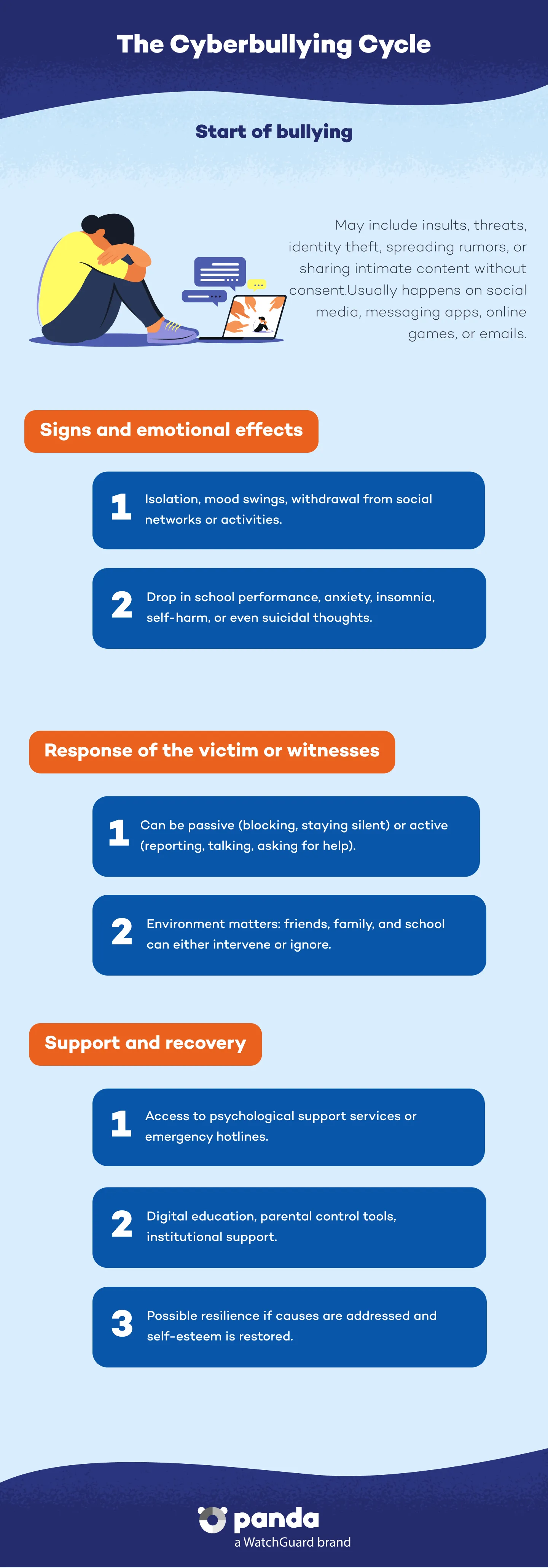
Detecting cyberbullying can be difficult, but certain behavioral changes can be telltale signs:


  1. Anxiety, irritability, isolation, or loss of interest in social media or activities people previously enjoyed.
     
  2. Problems sleeping, loss or increase in appetite, and even unexplained physical symptoms such as headaches or stomachaches. 
     
  3. Poor performance at work or school and a tendency to stop using digital devices. 
     
  4. Avoidance of contact, both physical and digital, and attempts to permanently disconnect. 


Such signs in young people should alert parents and educators to possible problems.

The Cyberbullying cycle - Panda Security

What to Do If You Are a Victim of Cyberbullying

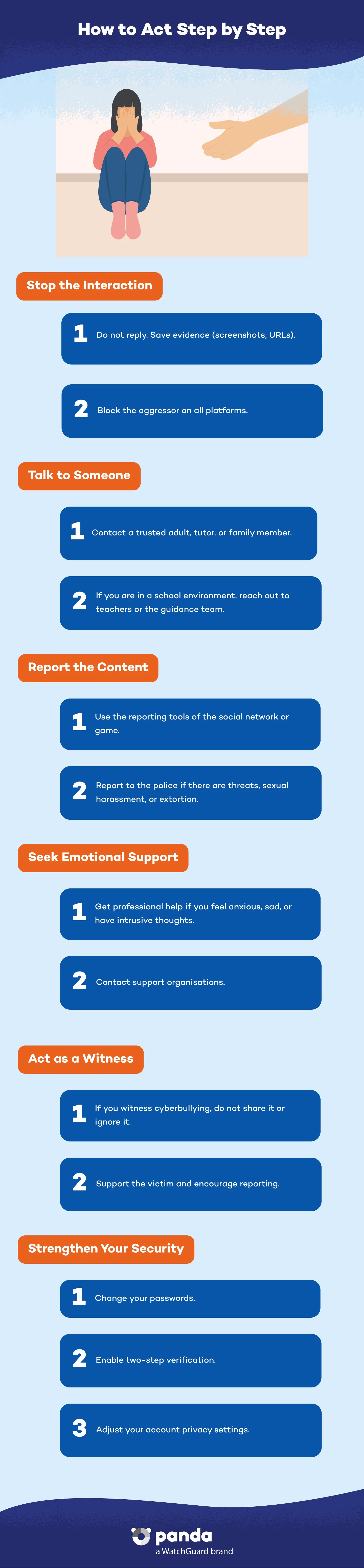
First and foremost, it is crucial not to respond with violence. As tempting as it might be, any such reaction can exacerbate the bullying. Instead, it is advisable to:


  • Collect and save any evidence: screenshots, call recordings, links, messages, any profiles involved.
  • Block and report the attackers on the corresponding platform.
  • Speak to a trusted adult, such as a parent, guardian, teacher, or mentor, and seek professional or legal guidance if necessary.
  • Report to the authorities. The authorities in each country are responsible for dealing with these cases, and the evidence gathered can be vital.


It is essential not to ignore the violence out of shame or fear, because the damage can worsen over time if no action is taken.

Cyberbullying: How to act step by step - Panda Security

Preventing Cyberbullying: Key Actions

Education from childhood is crucial. Teaching children to question content, verify who it is targeting, and be aware that anonymity doesn't exempt them from legal consequences is essential. Also, allowing them access to digital resources with restrictions and monitoring helps prevent them from falling under the influence of hostile groups or communities.


Parental control features, such as Panda Dome Family, enable parents to monitor smartphone use, limit access to apps, and receive alerts about inappropriate content, helping to ensure a safe environment.

Cyberbullying FAQs
Should I Always Report It?
Yes. Even if the case seems trivial, every case reported helps reduce the problem.
Which Platforms Are Most Dangerous?
Social networks have most reported cases (51%), followed by WhatsApp and email.
Is Cyberbullying a Crime?
Yes. Threats, identity theft, sextortion, and repeated harassment are dealt with under criminal law. Minors also have enhanced protection.
How Does Panda Dome Family Help?
It provides parental controls, automatic blocking, alerts for concerning behavior, and encourages safe digital habits.
Related Topics

Need help?

Call us 24 hours a day, 7 days a week, and get a free diagnosis.

Additional resources

Digital security is everyone's responsibility. With the right information and tools, you can reduce risks and use the Internet with peace of mind. Explore our guides and protect your online privacy.