In 2025, Americans lost $929 million to relationship and romance fraud. A common example is sugar baby scams, where scammers promise financial support, gifts or easy money, and then disappear once they get what they want. Even at the state level, the impact is clear — Washington State alone lost more than $22 million to these scams in the first nine months of 2025.
Many scammers rely on fake profiles, fast emotional bonding and catphishing tricks to seem believable. That said, these scams often follow familiar patterns, which makes them easier to spot once you know what to look for. Learn more about sugar baby scams and how you can stay safe from them.
What Are Sugar Baby Scams?
Sugar baby scams are a type of romance scam where someone pretends to offer financial support, gifts or a monthly allowance in exchange for companionship. The catch? The money never comes. Instead, the scammer asks for upfront fees, gift cards, banking details or personal information. And they disappear once they get what they need.
These scams often start on dating apps, social media or even LinkedIn. The scammer may claim to be a wealthy professional who wants a simple arrangement. It sounds easy, but the goal is to build trust fast and move the conversation off the platform.
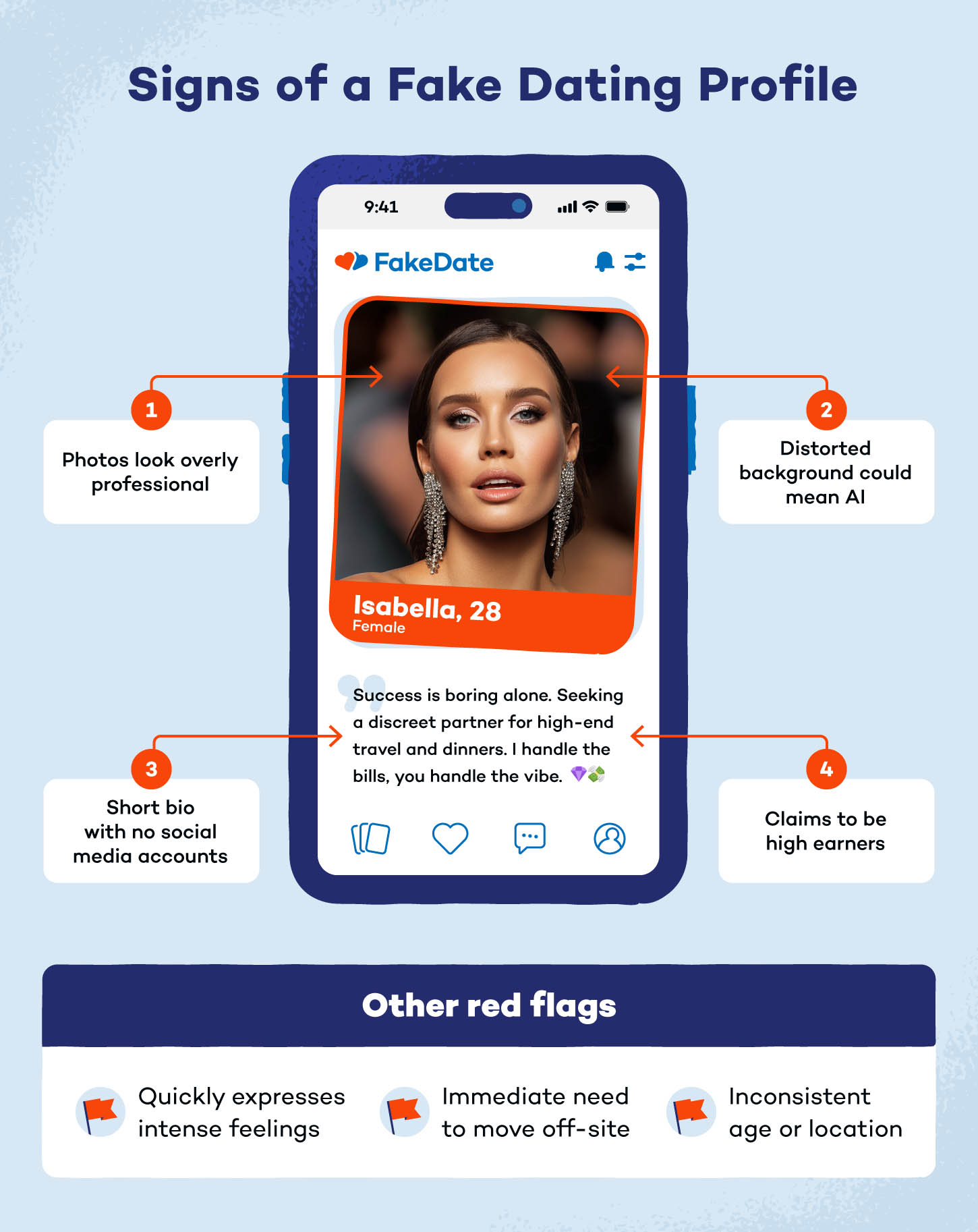
People often confuse sugar baby scams with catphishing, which focuses on using fake photos or identities to trick someone into a relationship. Catphishing is about pretending to be someone else; sugar baby scams usually add a financial angle.
Variations of the Sugar Baby Scam
Some romance scams promise easy money, while others pretend to need help. Below are the most common versions of sugar baby scams, so you can quickly spot the pattern.
The Fake Sugar Daddy/Momma Scam
A sugar daddy/momma is an older, financially stable person who provides money or gifts to a younger partner in exchange for companionship. Scammers twist this idea into frauds like sugar daddy scams, using fake profiles and fake sugar daddy messages to trick victims on platforms like Snapchat and Instagram.
Here’s how sugar daddy scams usually work:
- The scammer creates a fake profile on a dating app like Tinder, Bumble, Grindr and Scruff, or a sugar dating platform, such as Seeking. They can also reach out directly on Snapchat or Instagram.
- They send you friendly DMs promising easy money for simple conversation or online companionship.
- Scammers offer proof of payment, sometimes trying to prove they are your sugar daddy, sending a check through email or transferring money through apps like Zelle or Cash App.
- The payment appears real at first, but is often sent from stolen accounts or as a fake check.
- The scammer asks you to send part of the money back, often through gift cards, crypto or a transfer to a fake charity, because these payments are difficult to trace and almost impossible to recover.
- The original payment is later reversed or flagged as fraud, leaving you responsible for the money you sent.
Variations like the Scruff or Grindr sugar daddy scam target LGBTQ+ users. Staying up to date with LGBTQ+ digital security measures can help avoid these scams.
The Fake Sugar Baby Scam
A sugar baby is usually a younger person who receives financial support, gifts or experiences from a sugar daddy or momma. Scammers create fake sugar baby profiles on platforms like Instagram, Snapchat, WhatsApp and sugar dating sites like SugarBook or Sugardaddy.com.
Here’s how sugar baby scams usually work:
- A scammer builds an attractive profile using stolen or AI-generated photos to appear real.
- They build trust through friendly chats, often moving the conversation to WhatsApp, which might be the beginning of a WhatsApp scam.
- They ask for money for sudden problems like travel costs, emergencies or account verification fees. Some scams even involve a sugar baby mobile deposit scheme to get money from you.
- In more serious cases, scammers may collect private photos and threaten to share them unless you pay — a form of sextortion.
- Others use long-term tactics such as pig-butchering scams, encouraging you to invest in fake crypto platforms.
Some scammers also send links that install different types of malware, giving them access to your passwords, banking details or personal files.
Red Flags of a Sugar Baby Scam
Knowing how to spot a sugar daddy scam can save you money, stress and a major headache. While every situation is different, most sugar baby scams share similar warning signs.
If you notice several of these signs at once, something might be fishy:
- Unsolicited communication: A stranger contacts you out of nowhere, offering money, gifts or an arrangement where you get paid for romantic favors.
- Flattering messages: They quickly shower you with compliments to build trust fast.
- Too good to be true: Easy money with no real expectations is a classic sign of fraud.
- Clearly fake photo: Images may look like stock photos or appear copied from someone else’s profile. These things can help you spot a deepfake love scam.
- Personal info requests: They ask for banking details, ID photos or passwords early in the conversation.
- Links to fake websites: They may send background check or verification links designed to steal your data.
- Ask to return money sent: They claim a payment mistake and request part of the money back.
- Strange payment methods: Requests for gift cards, crypto or wire transfers are major red flags.
- Become angry if you hesitate: Scammers may act upset or impatient if you delay sending money.
- Refuse to be seen: They avoid video calls or meeting in person, often with excuses about travel or privacy.
- Threats of blackmail: They may threaten to share private photos or messages if you refuse to pay.
What to Do if You Fall for a Sugar Baby Scam
Falling for a scam can feel embarrassing, but you’re not alone — and you’re definitely not stuck. Many victims of a sugar daddy PayPal scam, sugar daddy cash app scam or even Telegram scams recover quickly once they take the right steps.
Here’s what you should do:
- Stop talking: End contact immediately so the scammer can’t ask for more money or information.
- Document everything: Save messages, usernames, payment receipts and screenshots as proof of the scam.
- Contact your bank: Inform your bank or payment provider right away to try reversing transactions or blocking further charges.
- Change affected passwords: Update passwords for email, banking, social media and any accounts you shared.
- Report to platform: Report the scammer’s profile on the app or website where the contact started.
- Report to authorities: File a complaint with local police, the Federal Trade Commission and the Internet Crime Complaint Center (IC3) so the scam can be tracked and investigated.
If you clicked suspicious links or downloaded files, run a full antivirus scan to check for hidden malware and remove it using anti-malware software like Panda Dome.
How to Protect Yourself From Sugar Dating Scams
Most sugar baby scams follow familiar patterns, so a few smart tactics can reduce your risk significantly, especially when dealing with messages from a Telegram sugar daddy or trying to spot wrong phone number scams early.
Follow these habits to avoid falling for sugar baby scams:
- Never send money: Real arrangements don’t require upfront fees, gift cards or transfers to unlock payments.
- Don’t overshare: Avoid sharing personal details, financial info or private photos over DMs or messaging apps.
- Reverse image search: Upload profile photos to search engines to check whether the images appear elsewhere online.
- Keep convos on original platform: Scammers often push you to move chats quickly to WhatsApp, Telegram or Snapchat to avoid moderation.
- Require a video call: A real person should be able to show up on camera — excuses are often a red flag.
- Be skeptical of unsolicited DMs: Random offers of easy money are a common entry point for scams.
- Use antivirus software: Antivirus software like Panda Dome can block fake websites, phishing links and malicious downloads before they cause damage.
- Use private numbers: A VoIP number (internet-based phone number) helps protect your real number and prevents strangers from tracing your location.
- Use private emails: Secure email providers like Proton Mail offer stronger privacy and reduce spam exposure.
- Use two-factor authentication (2FA): 2FA adds an extra login step, helping you protect your accounts even if someone learns your password.
These habits, paired with top antivirus software, make it much harder for scammers to succeed and much easier for you to stay safe online.
Protect Your Personal Data With Panda Security
Online scams keep evolving, making it crucial to have the most efficient protection.
Panda Dome antivirus helps you stay ahead of threats linked to sugar baby scams, phishing links and malicious downloads. It includes real-time antivirus protection that blocks suspicious files before they run. You also get protection against spyware that can steal your passwords, banking details and personal files.
Pick a plan that fits your needs and enjoy safer browsing and stronger privacy every day.
Sugar Baby Scams FAQ
Sugar baby scams can be confusing because they often look like real relationships or offers. Here are answers to common questions to help you spot red flags and stay safe.
Are Sugar Baby Scams Illegal?
Yes, sugar baby scams are a form of fraud, which is illegal in most countries. Scammers may also commit identity theft, financial fraud or blackmail.
Can You Get Your Money Back From a Sugar Daddy Scam?
Banks or payment apps may reverse transactions if reported quickly, but recovery is not guaranteed, especially with gift cards, crypto or wire transfers.
Is It Illegal to Be a Sugar Baby?
No, consensual arrangements between adults are generally legal, but scams and financial deception are not.
How Do I Tell if a Sugar Daddy Is Real Online?
To know if a sugar daddy is real, look for clear signs of authenticity. A real person will not ask for upfront fees, avoid video calls or pressure you to move conversations off trusted platforms. Also, legitimate sugar daddies don’t ask for a fee.
What Should I Do if a Scammer Has Sensitive Photos of Me?
Stop responding and do not pay the scammer. Save evidence, report the account to the platform and contact local authorities or cybercrime units. You can also report the incident to organizations like the FTC or IC3 for guidance.