


WhatsApp scams and text message scams are everywhere. They push fake offers, phony alerts and urgent messages designed to trick you into sharing personal details or sending money. And the scale is wild — scammers sent 19.2 billion spam texts in December 2025 alone. That’s about 63 spam messages for every person in the U.S.
WhatsApp has become a favorite channel for these schemes. From random messages sent from international numbers, like scams coming from +234 WhatsApp numbers, to fake prizes and impersonation attempts, the tactics are getting harder to ignore and easier to fall for.
Check out the 17 most common WhatsApp scams to watch out for and learn how to spot scam texts faster. We’ll also share some tips to help you avoid these scams.
1. Impersonation Scams
Scammers create fake WhatsApp accounts posing as someone you know, such as a friend, family member or colleague. They then use these accounts to send messages requesting money or personal information, exploiting the trust between you and the impersonated individual. These messages may appear urgent or convincing, leading you to comply with the scammer’s demands.
Example: “Hey, it’s me, John. I’m in a tight spot and can’t access my bank app. Can you send $100? I’ll return it today. Please don’t call — I’m in a meeting.”
2. Phishing Links
Phishing is one of the most common tactics used by scammers on WhatsApp. They send messages containing links that appear to be from reputable sources, such as banks, government agencies or well-known companies.
These links lead to fake websites designed to steal your login credentials, financial information or other sensitive data. Phishing links can also be disguised as legitimate messages from WhatsApp itself, prompting users to verify their accounts or download software updates.
Example: “WhatsApp Support: Your account is at risk due to a security breach. Verify your details now to avoid suspension: [fake link]”
3. Verification Code Scams
Verification code scams are one of the sneakiest types of scams because they feel routine. You get a message saying a login or security code was sent to you by mistake, followed by a casual request to share it. The truth is that scammers are trying to get into your account.
That code is the final step. Once it’s shared, they can reset passwords, lock you out and act fast before you notice anything is wrong. Many of these arrive as friendly-sounding scam texts that don’t raise red flags at first glance.
Example: “Hi, I sent a verification code to your number by mistake. Can you please send it to me? I need it to log in.”
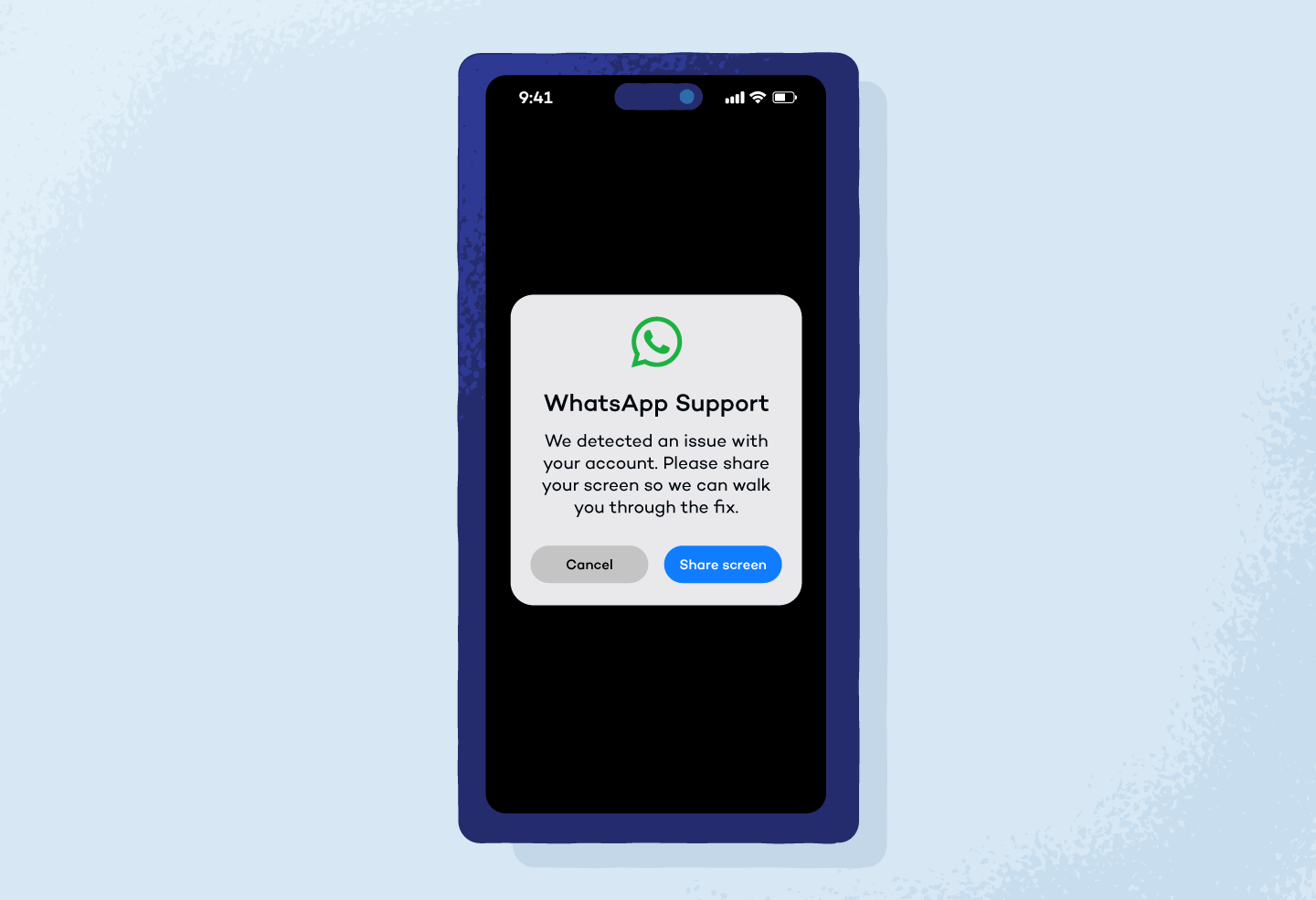
4. Screen Mirroring Scams
Screen mirroring or fake support scams often start with calm, helpful-sounding spam text messages claiming there’s a small issue with your account or device. You’re asked to contact support or follow a few steps to fix it.
The scammer then walks you through enabling screen sharing or installing a remote access app, saying it’s needed to help you. Once they can see your screen, they can watch you log in, capture passwords and grab security codes. These text message scams work because they feel cooperative rather than threatening.
Example: “WhatsApp Support: We detected an issue with your account. Please share your screen so we can walk you through the fix.”

5. Fake Promotions
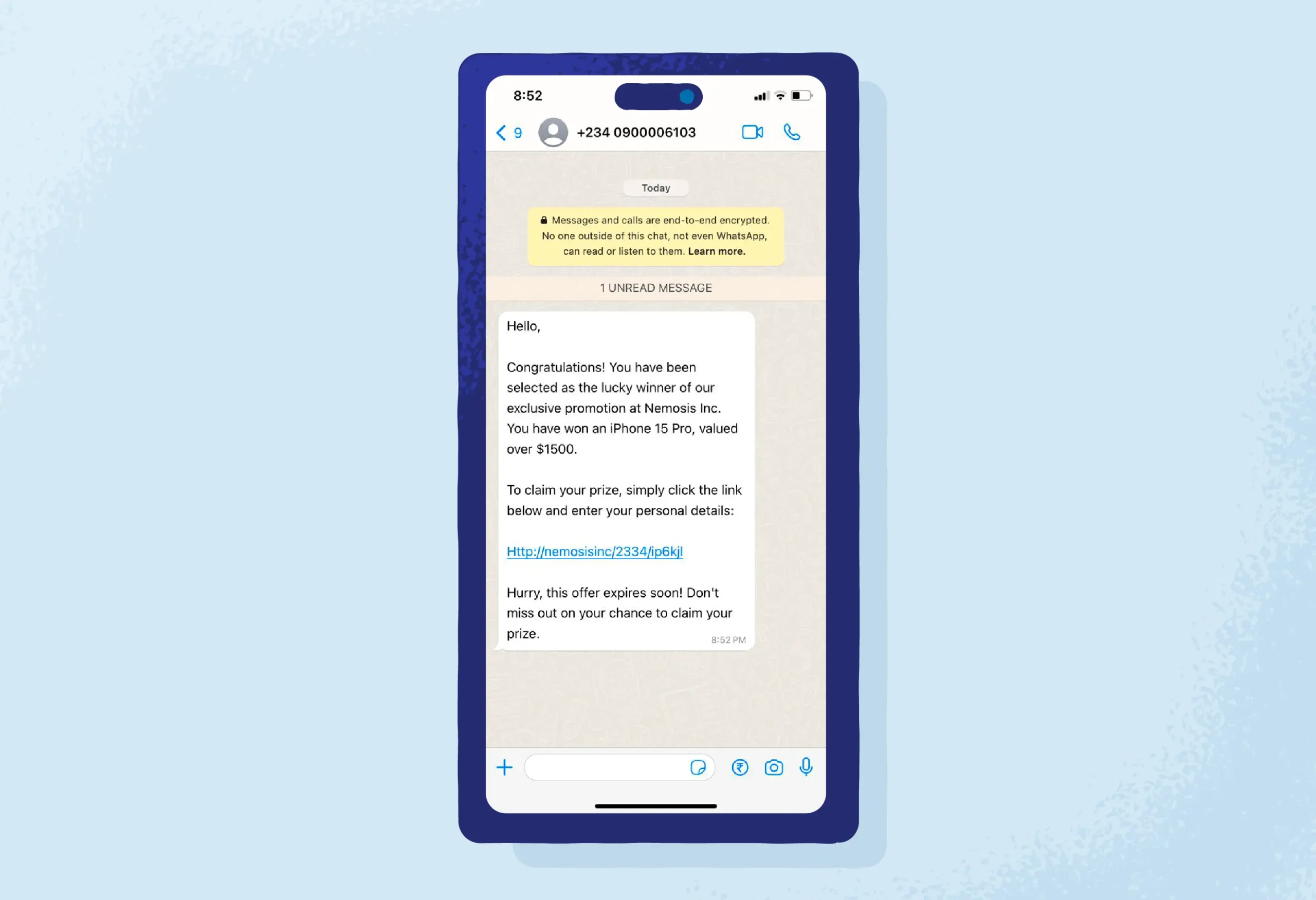
In this type of phishing scam, fraudsters often send messages promising exclusive promotions, giveaways or discounts to lure you into clicking on links or providing personal information.
These messages may claim to offer prizes from well-known brands or retailers, but in reality, they lead to fake websites designed to collect your personal and financial details. Be cautious of unsolicited messages promising rewards or discounts, and always verify the legitimacy of the offer before taking any action.
Example: “Congrats! You’ve been selected for a free iPhone giveaway from Apple. Claim your prize here: [fake link]”

6. Advance Fee Fraud
Advance fee fraud usually starts with spam text messages promising a large payout, prize, refund or financial opportunity that sounds just plausible enough to be tempting. To move things forward, the sender asks for a small upfront payment to cover processing, taxes or verification.
Once you send the money, the promised funds never arrive. The excuses drag on, or the scammer disappears completely. This scam works because the initial amount often feels low risk. But paying even once signals that you’re willing to engage, which can lead to repeat requests or follow-up scams.
And if you entered your credit card details to make that payment, the scammer now has your card information, which opens the door to unauthorized charges or resale on the dark web.
Example: “Congratulations! You’ve won a $5,000 reward. Pay the $25 processing fee here to release your prize: [fake link]”
7. Tech Support Scams
Scammers pose as tech support representatives and contact you, claiming issues with your WhatsApp accounts or other social media accounts, such as Facebook Page or Instagram Business accounts, that may be linked to your WhatsApp account. They then request access to the user’s account or personal information under the guise of fixing the problem.
Example: “WhatsApp Support: Your account is showing security errors. Send your login code so we can secure it immediately.”
8. Investment Scams
Investment scams on WhatsApp, including cryptocurrency scams, often begin with friendly messages that feel more like advice than a pitch. You might hear about a sure return plan, a new crypto coin or a private investing group with impressive returns. Screenshots of profits, success stories and calm reassurance do the heavy lifting.
Once you send money or connect your wallet, the updates slow down, the rules change or withdrawals suddenly require extra fees. The profits look great on-screen, but your balance never actually comes back to you. These scams work because they play the long game. Conversations feel personal, patient and low-pressure — right up until real money is involved.
Example: “I’ve been earning great returns from this new crypto platform. Want me to help you set it up? You can start with just $100.”
9. Romance Scams
In romance scams, fraudsters build romantic relationships with you on dating apps such as Tinder. They then gradually move to WhatsApp, gaining your trust over time.
Once trust is established, the scammer requests money for fabricated reasons like medical emergencies or travel expenses. This is why keeping an eye out for catphishing, especially in the online dating world, is important to avoid WhatsApp scams originating from dating apps.
Example: “I hate to ask, but I’m stuck with a medical bill and can’t cover the last $600. Can you help? I’ll pay you back as soon as I can.”
10. Identity Theft
Scammers use WhatsApp to lure you into sharing personal information such as login credentials, bank account details or your Social Security number. This information is then used for identity theft, which can lead to financial loss or other forms of fraud.
These scams often feel routine and harmless. Messages may look like standard security checks, account updates or verification requests you’ve seen before. Once personal details are shared, scammers can move quietly behind the scenes, opening accounts, changing passwords or selling the data to others.
Example: “Google Support: Your Gmail account needs verification. Reply with your full name and recovery code to keep your account active.”
11. Lottery Scams
Lottery scams show up on WhatsApp as unexpected good news. You’re told you’ve won a prize, a cash reward or an international lottery you don’t remember entering.
The message often sounds polite and official, with just one small catch: You need to pay a fee or share details to claim the winnings. Once you respond, the requests keep coming, but the prize never does.
Example: “Congrats! Your number was selected for a $10,000 lottery reward. Confirm your full name and address to process your payout.”
12. Charity Scams
Charity scams take advantage of generosity, especially during crises, holidays or breaking news events. Messages may claim to represent a real cause and urge you to donate quickly to help someone in need.
The story feels emotional and time-sensitive, which makes it easier to act without checking. The money goes straight to the scammer, not to any real organization.
Example: “We’re raising emergency funds for tornado victims in Texas. Any amount helps. Donate now at this link to support families in crisis: [fake link]”
13. Fake News and Hoaxes
Scammers may use WhatsApp to spread false information for various purposes, including political manipulation or financial gain. They could message you with a fake news article that is simply clickbait. And the link they share may lead you to a malicious website that asks for money to view certain classified or exclusive information.
Example: “BREAKING: Actor Chris Evans found dead — official details leaked. Read the full report here: [fake link]”
14. WhatsApp Gold Scam
The WhatsApp Gold scam promises access to a premium or upgraded version of WhatsApp with extra features. The message usually claims the invite is limited and shared only with select users, which adds a little buzz and a lot of pressure to click.
Once you tap the link, you’re pushed to download an app or share it with others. Best case, it’s junk. Worst case, it installs malware or hands over access to your account. WhatsApp Gold isn’t real, but the risk is.
Example: “Hey there! Have you heard about WhatsApp Gold? It’s the exclusive new version with amazing features like video calling and enhanced security. Just click this link to upgrade now and enjoy all the benefits.”
15. Fake Job Offers
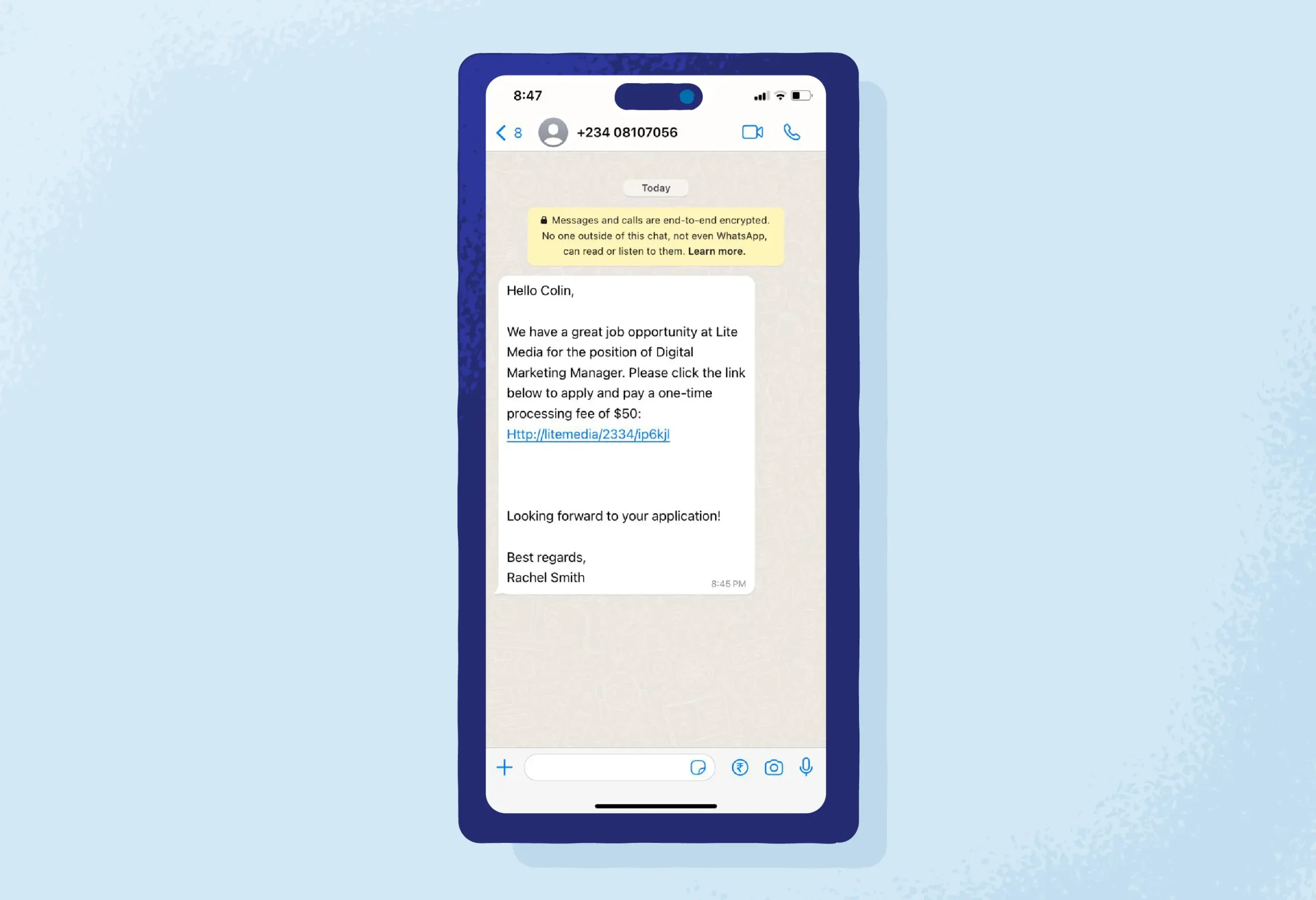
Fake job offers on WhatsApp often sound friendly, direct and oddly convenient. You might be contacted about a role you never applied for, with high pay, flexible hours and fast onboarding.
After a few messages, the catch appears: a small fee for training, background checks or starter materials. Once you send payment, the job vanishes — and so does the recruiter.
Example: “We reviewed your profile and think you’re perfect for a $90,000 remote position. To start onboarding, pay the $50 training fee here: [fake link]”
16. Fake WhatsApp Voicemail
Not all WhatsApp scams happen via text message. Scammers also use fake voicemail messages on WhatsApp to pretend to be someone you trust, like a friend or a bank. They might say there’s an urgent issue and ask for your personal information.
Example: “Voicemail from Bank of America: We detected unusual activity. Call us back at this number or verify your account here: [fake link]”
17. Scam Voice Calls
Scammers may try to initiate voice calls on WhatsApp to deceive users. This is a kind of phishing — voice phishing (vishing). They often use techniques like impersonating someone you know or claiming to represent a legitimate organization.
During the call, they may attempt to extract sensitive information or persuade you to take certain actions, such as sharing personal data or clicking on malicious links.
Example: “Hi, this is Chase Bank security. We need to verify your account immediately. Can you confirm your card number and PIN?”
How to Spot a WhatsApp Scam + Protection Tips
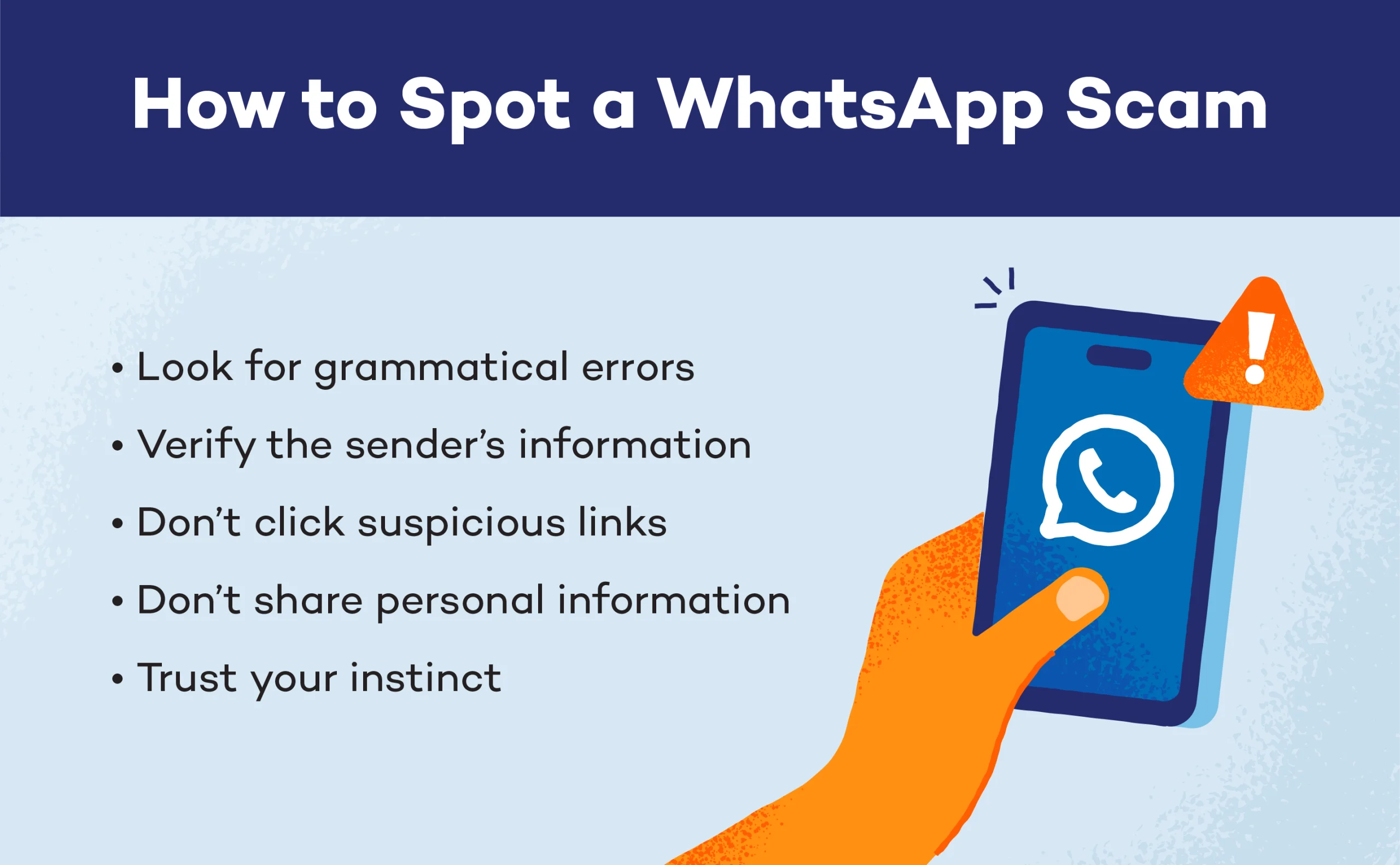

WhatsApp scams often look harmless at first. A normal message. A familiar tone. But the warning signs usually show up in the details.
Here are some ways to spot a WhatsApp scam:
- Unexpected messages: Scammers send messages in bulk and hope someone responds.
- Urgency: They use pressure to stop you from thinking or checking before responding or taking action.
- Code requests: They often use verification codes to take over accounts.
- Suspicious links: Fake pages and downloads are built to steal data or install malware.
- Too-good-to-be-true offers: Big rewards with little effort are meant to lower skepticism.
- Untriggered alerts: Real services don’t warn you about issues you didn’t start.
- Platform switching: Moving chats helps scammers avoid reports.
- Unusual payments: Gift cards and crypto are hard to trace or reverse.
How to Protect Yourself
A few simple habits can shut down most scams before they go anywhere. Here’s what you can do to prevent WhatsApp scams:
- Verify contacts: If a message seems off, confirm it through another channel before responding.
- Enable two-factor authentication: This adds a second layer of protection even if your password is compromised.
- Update privacy settings: Review who can see your profile, status and last seen, especially within your Android privacy settings.
- Educate yourself: Staying aware of common social media scams makes it easier to spot new ones.
- Report suspicious activity: Block and report scam accounts directly in WhatsApp to limit further spread.
- Avoid clicking unknown links: Even one tap can lead to fake sites or malware downloads.
- Never send payments or connect your crypto wallet: Scammers often push quick transfers or wallet links to steal funds instantly, with no way to reverse the transaction.
Stop WhatsApp Scams With Panda Security
Scams move fast, but Panda Security can help you move faster with tools like Panda Dome Antivirus. It blocks malicious links, flags risky downloads and adds a safety net when scam messages try to push you toward fake sites or files.
For account safety, you can use Panda Dome Password Manager, which helps you create strong and secure passwords and store them safely, so you’re not reusing the same login everywhere. That matters when scams aim for account takeovers using stolen codes or weak credentials.
Explore our suite of security tools to protect your accounts and stay one step ahead of WhatsApp scams.
WhatsApp Scams FAQ
Still have questions about WhatsApp scams? This section covers the most common concerns people have after receiving suspicious messages.
Why Do Scammers Use WhatsApp?
Scammers use WhatsApp because it’s widely trusted, free to use and encrypted. Messages feel more personal than email, and phone numbers make scams seem legitimate. It’s also easy to send messages in bulk, often from international numbers that are harder to trace.
Can a Scammer Hack My Phone Through WhatsApp?
A scammer can’t hack your phone just by messaging you on WhatsApp. The real risk comes from clicking on malicious links, downloading fake apps or giving out verification codes. Those actions can lead to malware installs or account takeovers, which is how scammers gain access.
How Can You Identify a Scammer on WhatsApp?
Look for urgency, unexpected requests and vague explanations. Scammers often avoid specifics, push you to act quickly and ask for codes, payments or personal details. Messages that come out of nowhere, especially from unknown or international numbers, deserve extra caution. If you spot a possible scammer, block the number immediately and report it through WhatsApp to help stop future attempts.
Is There Any Danger in Giving Someone Your WhatsApp Number?
On its own, your number isn’t enough to cause harm. But it can be used to send scam messages, attempt account takeovers or target you with follow-up scams. Sharing your number widely increases exposure, especially on public sites or forums.
Can Someone Steal My Identity Through WhatsApp?
Yes, if you share sensitive information. Scammers can collect login details, one-time codes or personal data through fake support messages or verification requests. Once that information is used elsewhere, identity theft can follow.
What Is the Area Code +234 in WhatsApp?
The +234 area code belongs to Nigeria and is commonly seen in WhatsApp scam messages. Treat messages from unfamiliar +234 numbers with caution, especially if they ask for money, codes or personal information.
What Can a Scammer Do With My Phone Number?
A scammer can use your phone number to send scam messages, attempt account takeovers or target you with phishing. It isn’t enough to steal your identity, but it can open the door to more scams.