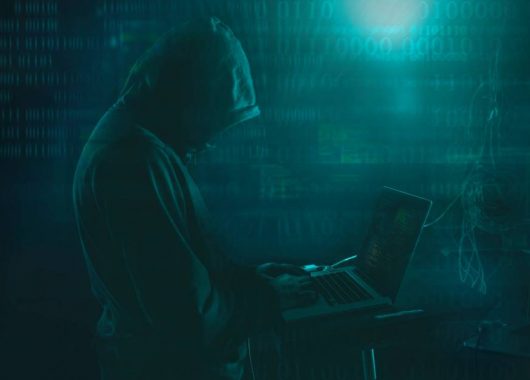
Kevin Mitnick is often considered the most famous hacker in history for his social engineering skills and high-profile computer intrusions, , including those of Motorola and Nokia. Other famous names include Kevin Poulsen, Albert Gonzalez, Gary McKinnon and Jonathan James, known for attacks ranging from bank heists to government network breaches.
Hacking has a reputation for being shady, but not every hacker wants to steal your passwords or break into your bank account. Hacking means finding ways to access or manipulate computer systems, often by spotting weaknesses others have missed. Some types of hackers use these skills to cause trouble, while others help make the Internet safer.
Over the years, a few hackers have become household names, earning fame for their daring attacks, clever tricks or efforts to expose security flaws. From notorious cybercriminals to ethical hackers who help protect people like you, these are 14 of the most famous hackers in history.
1. Kevin Mitnick: The World’s Most Wanted Hacker
Kevin Mitnick became one of the most famous bad actors in history through his talent for social engineering.
Rather than relying only on code, Mitnick used clever tricks to manipulate people into sharing passwords or giving him access to computer systems. He often posed as a trusted employee or technician, proving that a little human deception could open doors that even strong security couldn’t.
But the hacking adventures eventually caught up with him. After a two-year search, authorities arrested Mitnick in 1995. He spent five years in prison before turning his life around. Mitnick later became a cybersecurity consultant, helping companies find weaknesses in their systems before criminals could exploit them.
2. Kevin Poulsen: The Phone Hacker Who Won a Porsche
Kevin Poulsen earned his place in hacking history by taking control of radio station phone lines. In 1990, he hacked the phone system of a Los Angeles radio station to guarantee his place as the 102nd caller in a contest. His prize: a brand-new Porsche 944.
Poulsen had a knack for breaking into telephone networks, which eventually earned him the nickname “Dark Dante.” His luck ran out in 1991, though, when authorities arrested him.
After serving five years in prison, Poulsen turned to journalism. He became an investigative reporter, covering cybersecurity and crime for major publications.
3. Vladimir Levin: The $10 Million Citibank Heist
In 1994, Russian computer programmer Vladimir Levin pulled off one of the most infamous bank hacks in history. Working from a computer in St. Petersburg, Levin broke into Citibank’s cash management system using stolen customer IDs and passwords.
Levin and his accomplices carried out around 40 unauthorized transfers, moving more than $10 million into bank accounts across several countries. The operation caught the attention of the FBI, which began tracking the suspicious transactions.
His run ended in March 1995 when British authorities arrested him at London’s Heathrow Airport. He was later extradited to the U.S., where he pleaded guilty in 1998. Citibank managed to recover all but $400,000 of the stolen funds.
4. Robert Tappan Morris: Creator of the First Internet Worm
In November 1988, Cornell graduate student Robert Tappan Morris released a computer program that would become known as the Morris Worm. His experiment aimed to measure the size of the Internet, but a programming flaw caused the worm to replicate far too quickly.
Within 24 hours, it had infected an estimated 6,000 computers, bringing parts of the early Internet to a crawl. The incident made Morris one of the most infamous cyber hackers in history.
The attack also made legal history. In 1990, Morris became the first person convicted under the U.S. Computer Fraud and Abuse Act (CFAA), a federal law against unauthorized computer access. He received three years of probation, 400 hours of community service and a $10,050 fine. His experiment had consequences far beyond what he expected.
5. Jonathan James: NASA Hacker
At just 15, Jonathan James, who went by the online name “c0mrade,” broke into computer systems belonging to NASA and the U.S. Department of Defense in 1999. He accessed 13 computers at NASA’s Marshall Space Flight Center and downloaded proprietary software worth approximately $1.7 million.
Jonathan also breached the Defense Threat Reduction Agency’s network, intercepting more than 3,300 emails and collecting employee passwords. NASA shut down its affected systems for 21 days to investigate the intrusion.
He was arrested and sentenced at age 16, becoming the first juvenile hacker in the U.S. to serve time for computer crimes. He received six months in a detention facility and had to write apology letters to NASA and the Department of Defense.
6. Michael Calce (Mafiaboy): The Teen Who Took Down Yahoo
In February 2000, 15-year-old Canadian Michael Calce, better known as “Mafiaboy,” launched a series of distributed denial-of-service (DDoS) attacks against major websites. He used a network of compromised computers to flood websites with traffic, making them inaccessible to visitors.
Calce’s targets included Yahoo, CNN, Amazon, eBay and Dell. Yahoo was among the first to fall, suffering an outage that lasted around three hours. His attacks made headlines around the world and exposed serious weaknesses in Internet security.
Police arrested Calce in April 2000, and he later pleaded guilty to 56 criminal charges. A judge sentenced him to eight months in a youth detention center in 2001. The former computer hacker eventually turned his experience into a career in cybersecurity.
7. Gary McKinnon: The UFO Hunter
Gary McKinnon became famous for breaking into some of the most sensitive computer networks in the U.S. Between 2001 and 2002, the British hacker accessed 97 U.S. government computers, including systems belonging to NASA, the Pentagon, the Army and the Navy.
McKinnon later said he was searching for evidence of UFOs and extraterrestrial technology. U.S. authorities accused him of deleting critical files and disrupting military networks, causing an estimated $900,000 in damages.
His hacking activities sparked a decade-long legal battle between the U.K. and U.S. over his extradition. American authorities wanted him to stand trial in the U.S., where he faced a lengthy prison sentence. After several failed appeals, McKinnon finally received a reprieve in October 2012.
8. Adrian Lamo: “The Homeless Hacker”
Adrian Lamo earned the media nickname “the Homeless Hacker” because he traveled across the country, often sleeping in abandoned buildings or on friends’ couches. He used public computers at Internet cafes and libraries to break into corporate networks.
Lamo’s targets included Microsoft, Yahoo and WorldCom. He often alerted the affected companies to security flaws after accessing their systems, earning a reputation as a gray hat hacker.
The New York Times was Lamo’s most notorious intrusion. In 2002, Lamo broke into the newspaper’s internal network and accessed a database containing personal information of 3,000+ contributors. He later pleaded guilty to computer fraud charges and received six months of home confinement, two years of probation and a fine of more than $64,900.
9. Jeanson James Ancheta: The Botnet Pioneer
Jeanson James Ancheta built an army of infected computers by spreading malicious software across the Internet. His code turned thousands of home computers into remotely controlled machines called bots. Together, these machines formed a botnet, which Ancheta used to send spam and launch attacks against websites.
Ancheta also found a way to make money from his growing network by selling access to other bad actors and spammers. And that’s not all. He used the infected computers to install advertising software without their owners’ knowledge, earning money from each installation.
Prosecutors estimated that his operation affected more than 400,000 computers. In 2006, he received a 57-month prison sentence after pleading guilty to federal charges. His case became the first U.S. prosecution focused on profiting from botnets.
10. Albert Gonzalez: The 170 Million Credit Card Thief
Albert Gonzalez led one of the largest credit card theft operations in U.S. history. Between 2005 and 2007, he and his accomplices hacked into major retailers, including TJX, BJ’s Wholesale Club and OfficeMax. They used techniques such as SQL injection and malicious software to break into payment systems and steal customer data.
Prosecutors linked the wider operation to more than 170 million stolen credit and debit card numbers, making Gonzalez one of the most notorious cybercriminals of his time.
Gonzalez and his team sold the stolen card details to other criminals, who used them to make fraudulent purchases and withdraw cash. His operation eventually caught up with him, and he pleaded guilty to multiple charges in 2009. In March 2010, a U.S. court sentenced him to 20 years in prison.
11. Kane Gamble (“Cracka”): The Teen Who Targeted the CIA Director
British teenager Kane Gamble was just 15 when he made headlines for hacking some of the most powerful people in U.S. intelligence. Using the online name “Cracka,” he founded a group called “Crackas With Attitude” and used social engineering to trick telecommunications employees into revealing account details.
Gamble’s targeted then-CIA Director John Brennan, FBI Deputy Director Mark Giuliano and Homeland Security Secretary Jeh Johnson. He accessed their personal email and phone accounts, then shared sensitive information online.
He carried out the attacks from his family home in Leicestershire, England, between 2015 and 2016. Authorities arrested him in February 2016, and he later pleaded guilty to 10 hacking-related offenses. In April 2018, at age 18, he received a two-year detention sentence.
12. Marcus Hutchins: The Researcher Who Stopped WannaCry
In May 2017, British security researcher Marcus Hutchins became an unlikely hero when he helped stop the spread of WannaCry, a ransomware attack that infected computers around the world.
While examining the malware, Hutchins spotted a strange web address hidden in its code. He registered the domain for $10.69, accidentally activating a kill switch that stopped the malware from infecting more computers. His discovery helped prevent further damage from one of the most disruptive cyberattacks in history.
However, Hutchins had a complicated past. In 2019, he pleaded guilty to creating and distributing two types of malware, including the Kronos banking Trojan, which stole victims’ financial information.
A judge sentenced him to time served and one year of supervised release, recognizing his later contributions to cybersecurity. His story is a reminder that even a hacker’s past can take some unexpected turns.
13. Graham Ivan Clark: The Teen Behind the 2020 Twitter Hack
It was July 2020 when 17-year-old Graham Ivan Clark pulled off one of the most talked-about social media hacks in history.
Clark and his accomplices used social engineering to trick Twitter employees into giving them access to internal systems. They then took control of around 130 accounts, including those belonging to Barack Obama, Elon Musk, Bill Gates and Joe Biden.
The hackers posted fake Bitcoin giveaways, promising to double anyone’s cryptocurrency deposits. The scam collected more than $100,000 before authorities stepped in. Clark’s identity eventually came to light, and authorities arrested him in Florida. In March 2021, he pleaded guilty to multiple charges and received a three-year sentence in a juvenile facility.
14. Arion Kurtaj: The Lapsus$ Teen Behind the GTA VI Leak
Arion Kurtaj was a teenage member of Lapsus$, an international hacking group known for targeting major technology companies. The group attacked companies including Nvidia, Uber and Rockstar Games, often stealing data and demanding money.
In September 2022, Kurtaj broke into Rockstar Games and leaked around 90 video clips from the unreleased Grand Theft Auto VI. He even shared the game’s source code threats through the company’s internal Slack channels.
Kurtaj’s hacking spree continued while he was on police bail for earlier offenses. In August 2023, a jury found that he had carried out multiple hacking and blackmail offenses. However, doctors had deemed him unfit to stand trial. In December 2023, a judge ordered his indefinite detention in a secure hospital.
Who Are the Most Famous Hacker Groups?
Hacking groups have made headlines for all kinds of reasons. Some use their skills to protest censorship or expose wrongdoing, while others target companies and governments for money or political gain. Here are four of the most famous groups and the attacks that put them on the map.
15. Anonymous
Anonymous emerged from the online forum 4chan around 2003. The loosely organized hacktivist collective became famous for attacks against organizations it accused of censorship or wrongdoing.
One of Anonymous’ best-known campaigns targeted the Church of Scientology in 2008, using website attacks and online protests to challenge the organization’s actions. Anonymous later supported other causes through website disruptions and data leaks.
16. Lazarus Group
Lazarus Group is a North Korean state-sponsored hacking group linked to some of the world’s biggest cyberattacks. Its best-known operations include the 2014 Sony Pictures attack and the 2017 WannaCry ransomware outbreak, which affected computers in at least 150 countries.
The group has also stolen hundreds of millions of dollars in cryptocurrency, including $100 million from Harmony’s Horizon bridge in 2022.
17. Fancy Bear
The real name of the group is APT28 — Fancy Bear is just the nickname. APT28 is a hacking group linked to Russia’s military intelligence agency, the Main Intelligence Directorate (GRU).
The group specializes in political espionage and has targeted government agencies, military organizations and political institutions. One of its best-known operations involved hacking the German Parliament in 2015 and stealing data from lawmakers’ email accounts.
18. Scattered Spider
Scattered Spider is a cybercriminal group known for targeting major companies through phone-based social engineering. Its members often impersonate employees or IT support staff to trick help desk workers into resetting passwords or handing over login details.
The group has targeted companies across several industries, using stolen access to steal data and demand ransom payments. It has also used SIM-swapping attacks to take control of victims’ phone numbers.
What Famous Hacking Incidents Teach Us About Online Safety
The stories behind these hacker names reveal how easily cybercriminals can take advantage of everyday habits. You don’t need to be the best hacker in the world to protect yourself, either. A few precautions can make it much harder for attackers to get their hands on your information.
Here are five lessons you can take from these famous hacking incidents:
- Social engineering (Mitnick and Gamble): Check who you’re talking to before sharing personal information. Scammers can pretend to be someone you trust, so verify unexpected requests before responding.
- Data breaches (Gonzalez): Keep an eye out for exposed accounts. Dark web monitor tools can check if your email address appears in known data breaches.
- Botnets (Ancheta): Use real-time antivirus protection to stop malware from hijacking your devices and adding them to a botnet.
- Account takeovers (Clark): Create unique passwords for every account, store them in a password manager and turn on two-factor authentication.
- Public Wi-Fi snooping (McKinnon): Try a virtual private network (VPN) when connecting to public networks you don’t trust. A VPN encrypts your Internet traffic and makes it harder for others on the same network to spy on your activity.
You can also take a page from white hat hackers. They use their skills to find security weaknesses before criminals can exploit them. Staying curious about online threats and keeping your devices protected can help you do the same for your digital life.
Keep Your Family Safe From Hackers With Panda Dome
You’ve met some of the most famous hacker names in history. Now it’s time to make sure your family doesn’t become the next headline. Panda Dome antivirus helps protect your devices from malware, phishing attempts and other online threats, so everyone can browse, shop and play worry-free.
Give cybercriminals a harder target with real-time antivirus protection and tools that help keep your family’s personal information safe. You handle family life. Let Panda Dome help watch your digital back.
Protect your family with Panda Dome today.
Famous Hackers FAQ
Who Is the Most Famous Hacker in the World?
Kevin Mitnick is often considered one of the most famous hackers in history. He became known for breaking into computer systems through social engineering and later built a career as a cybersecurity consultant.
What Was the Biggest Hack in History?
There are many cyberattacks that made the headlines for being one of the biggest hacks in history. Cyberattacks can be measured by financial losses, number of victims or damage caused. The 2017 WannaCry ransomware attack stands out for its global reach, infecting computers in at least 150 countries.
Who Are Some Famous Fictional Hackers?
Some well-known fictional hackers include Elliot Alderson from Mr. Robot, Lisbeth Salander from The Girl with the Dragon Tattoo and Neo from The Matrix. Their stories bring hacking into the worlds of crime, mystery and science fiction.
Do Famous Hackers Go to Prison?
Yes, several famous hackers, including Kevin Mitnick, Kevin Poulsen and Albert Gonzalez, served prison sentences for their crimes. Others have faced detention, probation or other legal penalties.