Running a small business already comes with enough headaches, and cyberthreats shouldn’t be one of them. Without strong protection, a single phishing email or infected download can lock your files, steal customer data or shut down operations for days. And you find yourself dealing with ransomware threats.
The impact goes beyond systems and spreadsheets. Ransomware statistics reveal that in ransomware cases where data was encrypted, every organization reported direct consequences for its IT or security teams. Also, 41% said the attacks increased anxiety or stress about future incidents.
That’s why business security and reliable business antivirus software are important. The right protection helps stop threats early and keeps your team focused on work instead of damage control. Explore 10 of the best antiviruses for small businesses and how each option can help you protect your data.
Antivirus Software for Small Businesses: Overview
Here’s a list of the top 10 antivirus software options for small businesses, so you can quickly compare features, supported devices and pricing.
| Antivirus | Best for | Key features | Devices covered | Platform support | Starting price | Free trial/version? |
|---|---|---|---|---|---|---|
| Panda Dome | Overall protection for small teams | Real-time malware protection, VPN, USB protection | 1 to unlimited devices | Windows, macOS, Android, iOS | $34.99/yr/device | ✅ |
| Norton Small Business | Small teams without IT staff | Cloud backup, VPN, password manager | Up to 5 employees (multiple devices each) | Windows, macOS, Android, iOS | $99.99/yr | ✅ |
| Bitdefender GravityZone | Centralized security | Cloud dashboard, ransomware protection, endpoint analytics | Multiple endpoints | Windows, macOS, Linux | $81.19/yr (3 devices) | ✅ |
| Avast Business Security | Cloud-managed protection | AI threat detection, firewall, network discovery | Up to 5 devices (entry plans) | Windows, macOS | $148.36/yr | Only on Ultimate plan |
| McAfee Business Protection | Multi-device security | Web protection, firewall, identity tools | PCs, Macs, phones, tablets | Windows, macOS, Android, iOS | Custom pricing | Maybe |
| Microsoft Defender for Business | Microsoft-based workplaces | EDR, vulnerability management, centralized dashboard | Per user across devices | Windows, macOS, Android, iOS | $3/user/mo | ✅ |
| Sophos Intercept X | Advanced threat detection | AI malware defense, anti-exploit tech, cloud console | Endpoint devices | Windows, macOS | Custom pricing | ✅ |
| Malwarebytes for Teams | Fast threat removal | Behavior-based detection, cloud console, quick scans | 3-20 devices depending on plan | Windows, macOS | $119.99/yr | Maybe |
| ESET PROTECT Enterprise | Lightweight protection | XDR, encryption, centralized console | Multiple endpoints | Windows, macOS, Linux, Android, iOS | Custom quotes | Maybe |
| CrowdStrike Falcon Go | AI-powered security | Machine learning detection, endpoint monitoring | Per device | Windows, macOS | $59.99/yr/device | ✅ |
1. Panda Dome: Best Overall
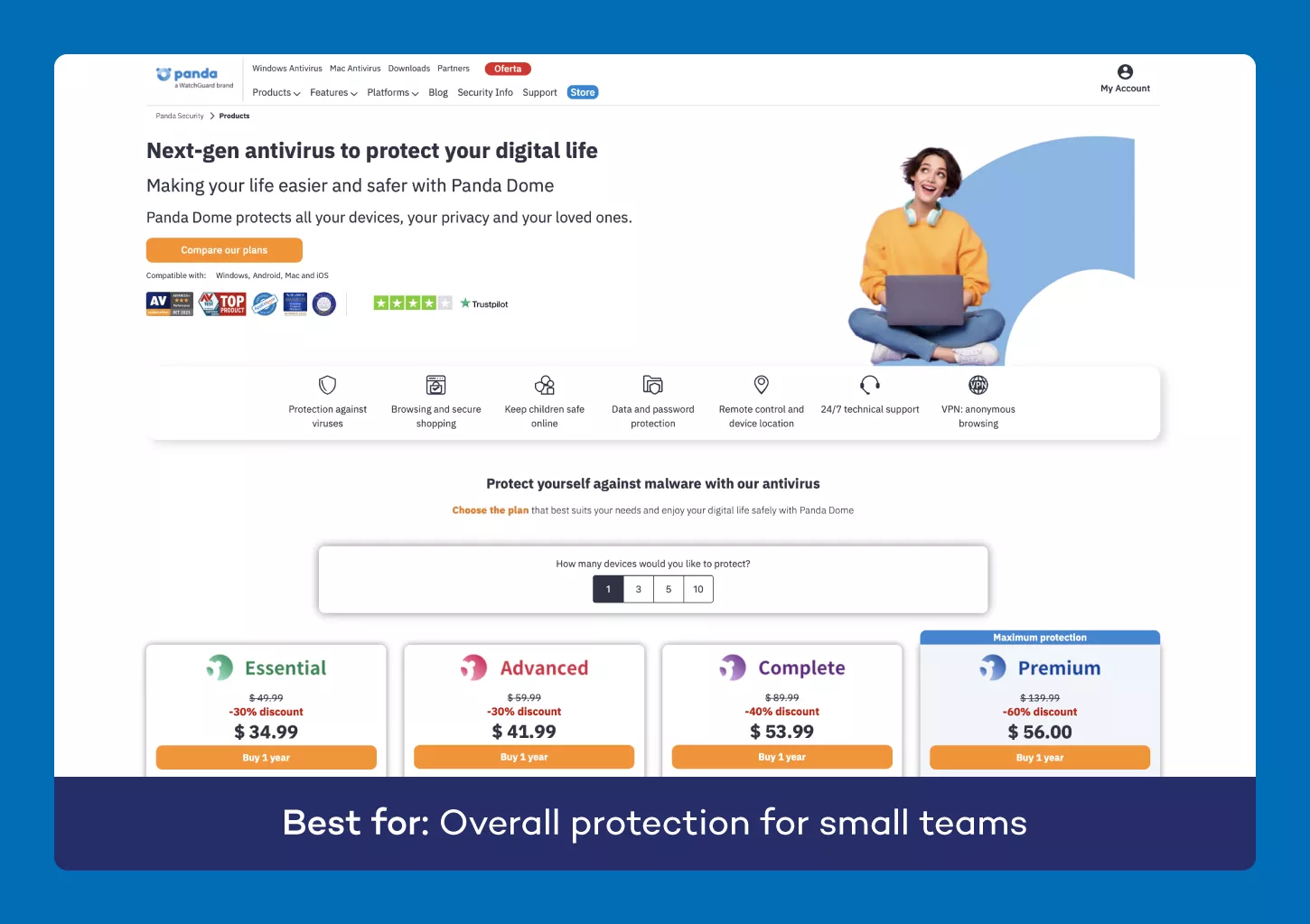
The platform runs quietly in the background while blocking malware, ransomware and suspicious downloads. And since it also acts as lightweight security management software, businesses can monitor and manage multiple devices without needing a full IT department.
Setup is quick. Install the app, sign in and the protection starts scanning almost immediately. Most users report that the interface is easy to navigate, even for non-technical staff. The software supports Windows, macOS, Android and iOS, and depending on the plan, you can protect anywhere from one device to unlimited devices.
Key features:
- Real-time malware and ransomware protection
- Built-in virtual private network for safer browsing on public networks
- Device optimization tools to keep systems running smoothly
- USB protection to block infected external drives
- Dark web monitoring for leaked credentials
Pricing
Along with a free version, Panda Dome offers four tiers that scale based on features and the number of protected devices:
- Essential: $34.99/year/device
- Advanced: $41.99/year/device
- Complete: $53.99/year/device
- Premium: $56/year/device
2. Norton Small Business: Best for Small Teams Without IT Staff
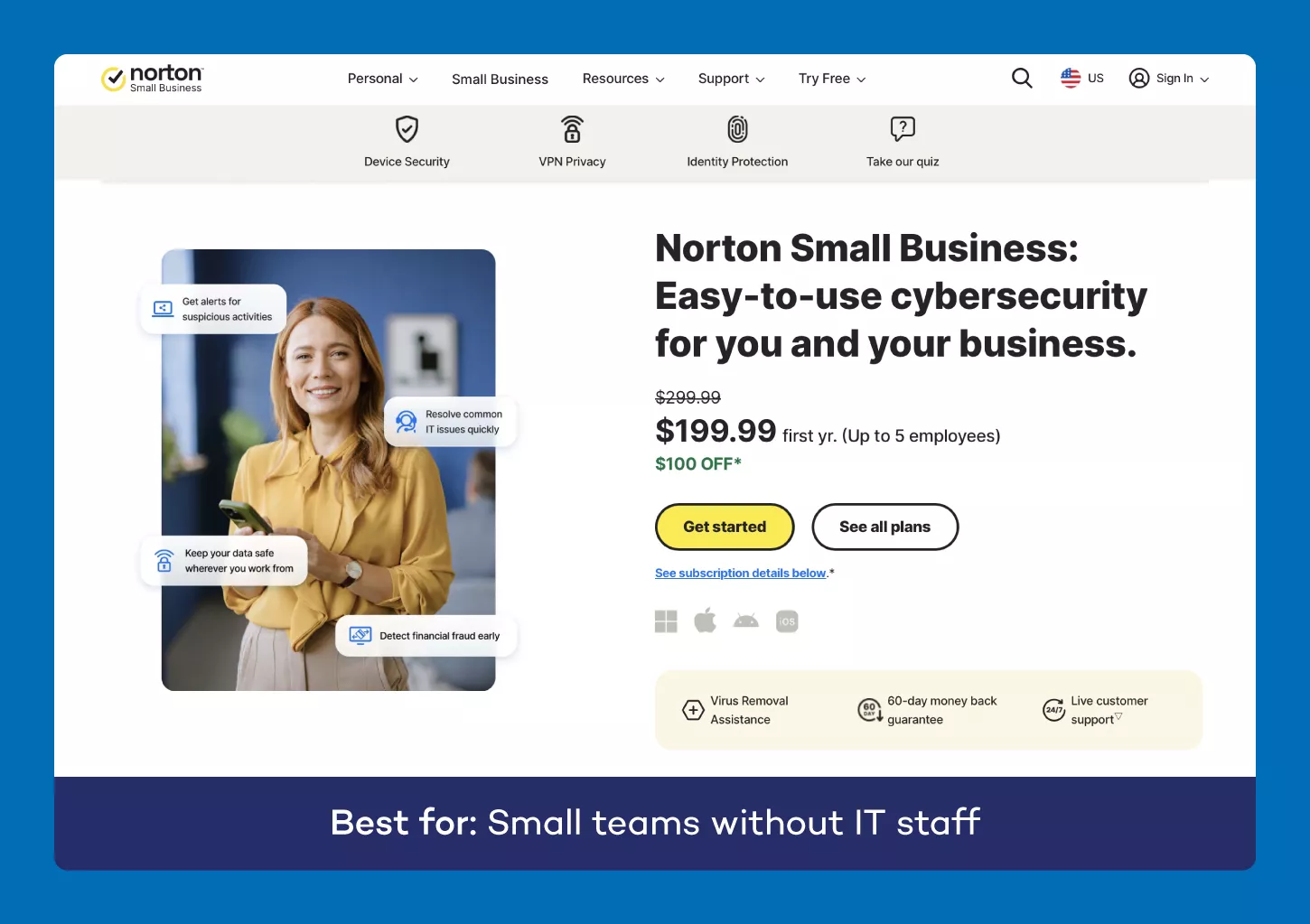
One reason people choose Norton is the extra tools bundled with the antivirus. The platform includes features like secure cloud backup, password management, software updates and a secure browser to reduce common attack risks. Higher plans also add a VPN and expanded cloud storage, which help protect business data and remote workers using public Wi-Fi.
Users often praise how easy it is to install and manage. Most devices can be protected in minutes with a simple download link. Reviews also highlight the convenience of protecting multiple work devices under one license. Where it can fall short is advanced control — larger companies that need deep security management tools may find it a bit limited.
Key features:
- Real-time antivirus and malware protection
- Cloud backup (250 GB or 500 GB, depending on plan)
- Password manager for secure logins
- Software updater to patch vulnerabilities
- Secure VPN in higher-tier plans
Pricing
- Small Business: $99.99 for the first year for up to 5 employees
- Small Business Premium: $199.99 for the first year for up to 5 employees
3. Bitdefender GravityZone: Best for Centralized Security
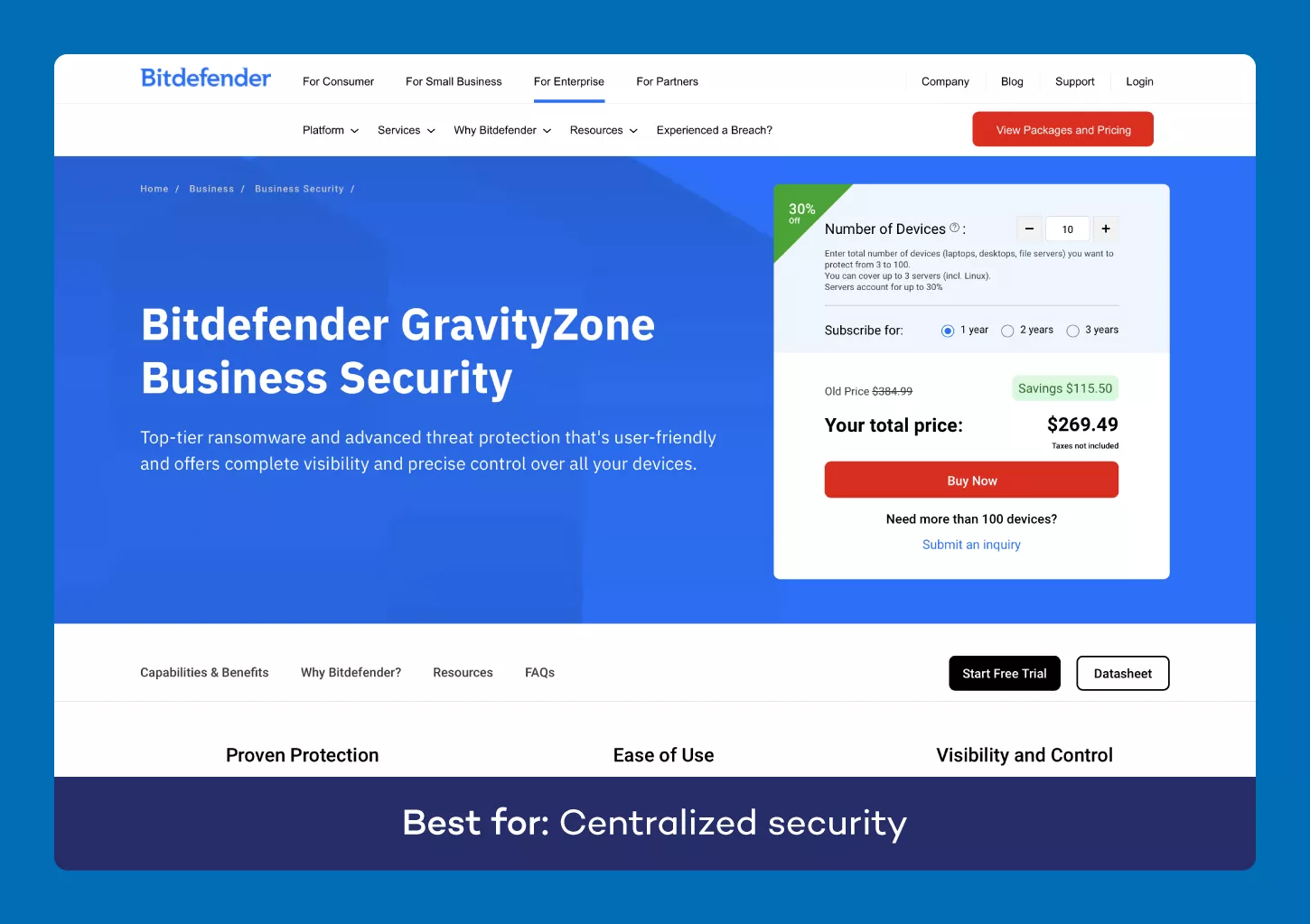
GravityZone packs enterprise-level protection into a system that small companies can still manage. It uses layered security to stop ransomware, phishing and fileless attacks before they spread. The cloud-based console makes it easier to track security events and automate responses without running extra servers or complicated infrastructure.
Users often praise its strong malware detection and reliable performance. Independent tests frequently rank Bitdefender among the top tools for business protection. Some reviews also mention that the platform offers deep control and customization, which experienced IT teams appreciate.
The flip side: Companies with no technical staff may find the controls more advanced than simpler antivirus tools.
Key features:
- Centralized cloud dashboard to monitor all devices
- Multi-layer ransomware and phishing protection
- Endpoint risk analytics to identify vulnerabilities
- Device and application control to block unsafe software
- Automated threat detection and response
Pricing
Bitdefender GravityZone costs $81.19/year for up to 3 devices.
4. Avast Business: Best for Cloud-Managed Protection
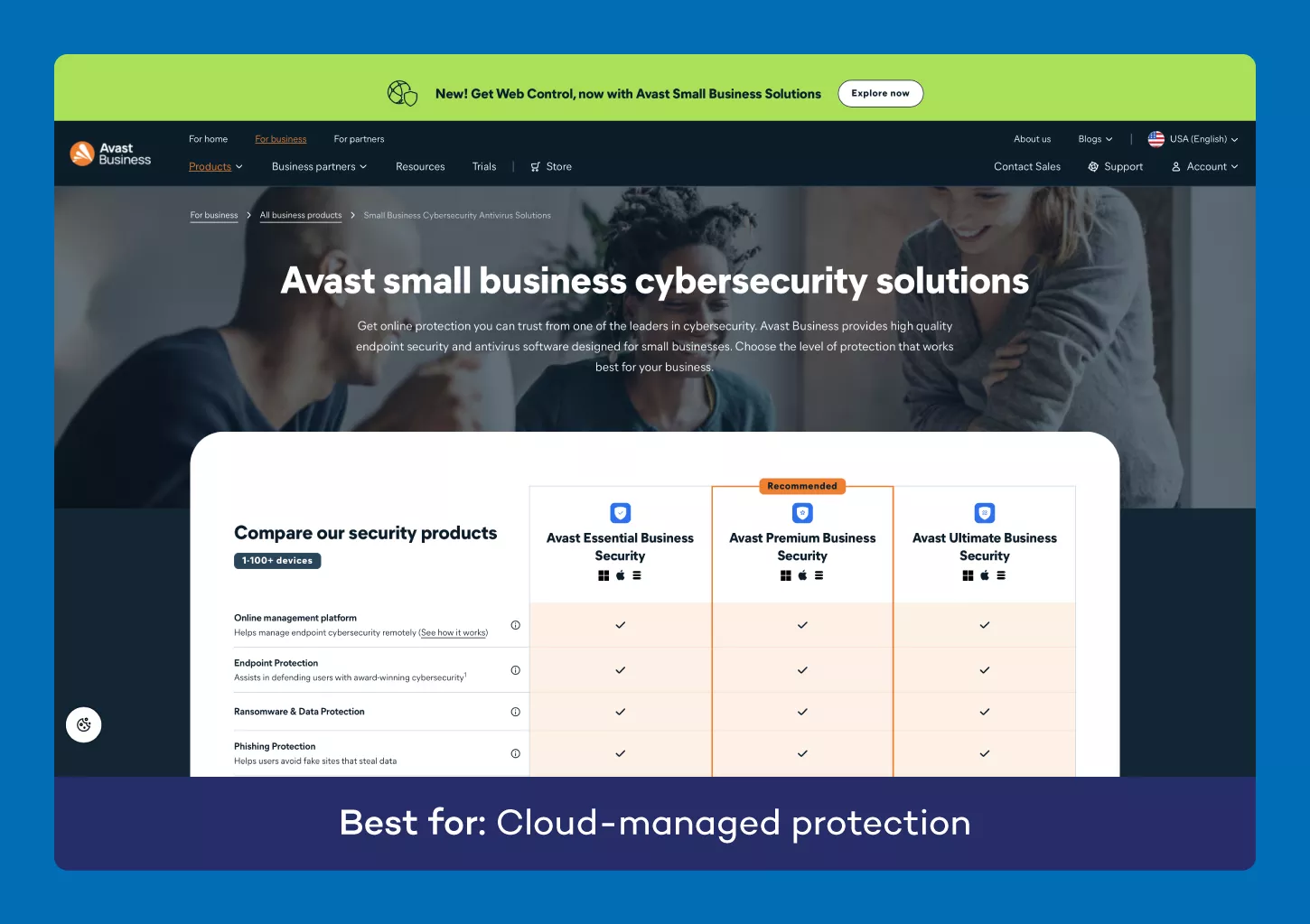
One standout feature is the Avast Business Hub, a cloud console that shows security alerts, device status and threat reports in real time. Admins can deploy updates, adjust policies or add new devices remotely without touching each computer. The software also includes AI-powered threat detection, firewall protection and network monitoring.
Users tend to like Avast for its straightforward dashboard and affordable pricing. Many reviews mention that it delivers solid malware protection while staying easy to manage. Where it may fall short is in advanced enterprise analytics. Larger companies with dedicated security teams may want deeper monitoring tools than Avast provides.
Key features:
- Cloud management console for monitoring all devices
- AI-powered malware and ransomware detection
- Firewall and phishing protection
- Network discovery to find vulnerable devices
- Remote deployment and security updates
Pricing
Avast offers three plans for its small business antivirus:
- Avast Essential Business Security: $148.36 for the first year for up to 5 devices
- Avast Premium Business Security: $187 for the first year for up to 5 devices
- Avast Ultimate Business Security: $227.08 for the first year for up to 5 devices
5. McAfee Business: Best for Multi-Device Protection
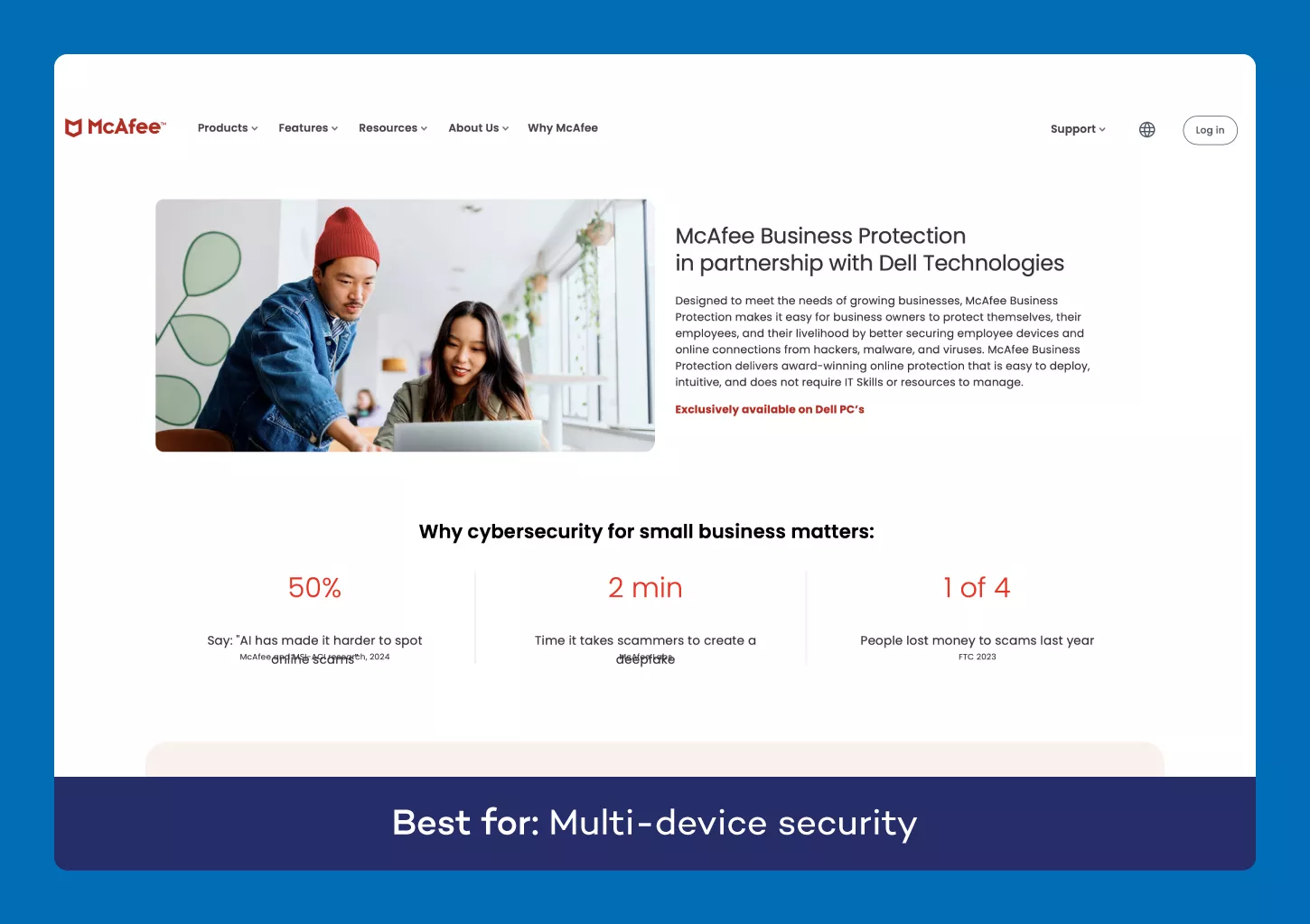
McAfee combines traditional antivirus with extra security layers that small companies often overlook. It scans downloads, blocks fake websites and watches for unusual behavior that might signal malware or ransomware. The system also includes firewall protection and safe browsing tools that prevent employees from accidentally opening infected files.
Many users like McAfee for its broad device coverage and reliable malware detection. It protects PCs, Macs, smartphones and tablets with the same security engine, which keeps things simple for small teams. However, some reviews mention that scans can use noticeable system resources on older machines.
Key features:
- Real-time malware and ransomware detection
- Web protection that blocks malicious websites and phishing pages
- Built-in firewall to prevent unauthorized access
- Multi-device coverage for computers and mobile devices
- Identity and privacy protection tools
Pricing
Pricing isn’t publicly available for McAfee’s small business cybersecurity and antivirus solutions.
6. Microsoft Defender for Business: Best for Microsoft-Based Workplaces
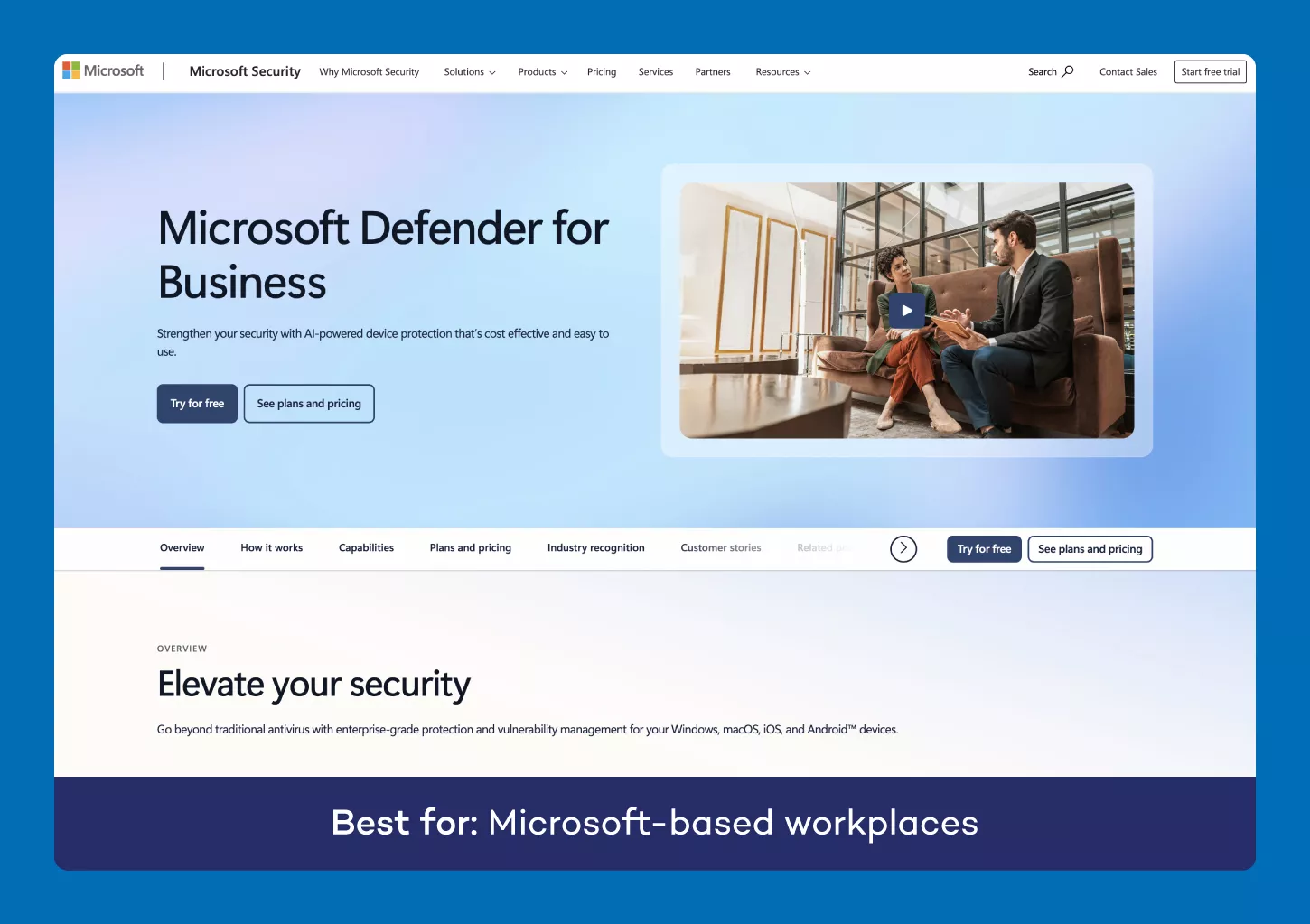
Defender for Business focuses on endpoint protection. It continuously scans devices for suspicious behavior and blocks threats in real time. You can monitor devices, alerts and security recommendations through a centralized dashboard. Because it runs through Microsoft’s cloud platform, updates and threat intelligence arrive automatically without extra setup.
Users often appreciate the tight integration with Windows systems and Microsoft 365 accounts. Deployment is also simple for businesses already using Microsoft services. The trade-off is that companies outside the Microsoft ecosystem may not get the same smooth experience, and some advanced features work best with other Microsoft security tools.
Key features:
- Endpoint detection and response (EDR) to stop advanced threats
- Centralized security dashboard for device monitoring
- Automated threat investigation and remediation
- Built-in vulnerability management for outdated software
- Protection for Windows, macOS, iOS and Android devices
Pricing
Microsoft Defender for Business costs $3/user/month.
7. Sophos Intercept X: Best for Advanced Threat Detection
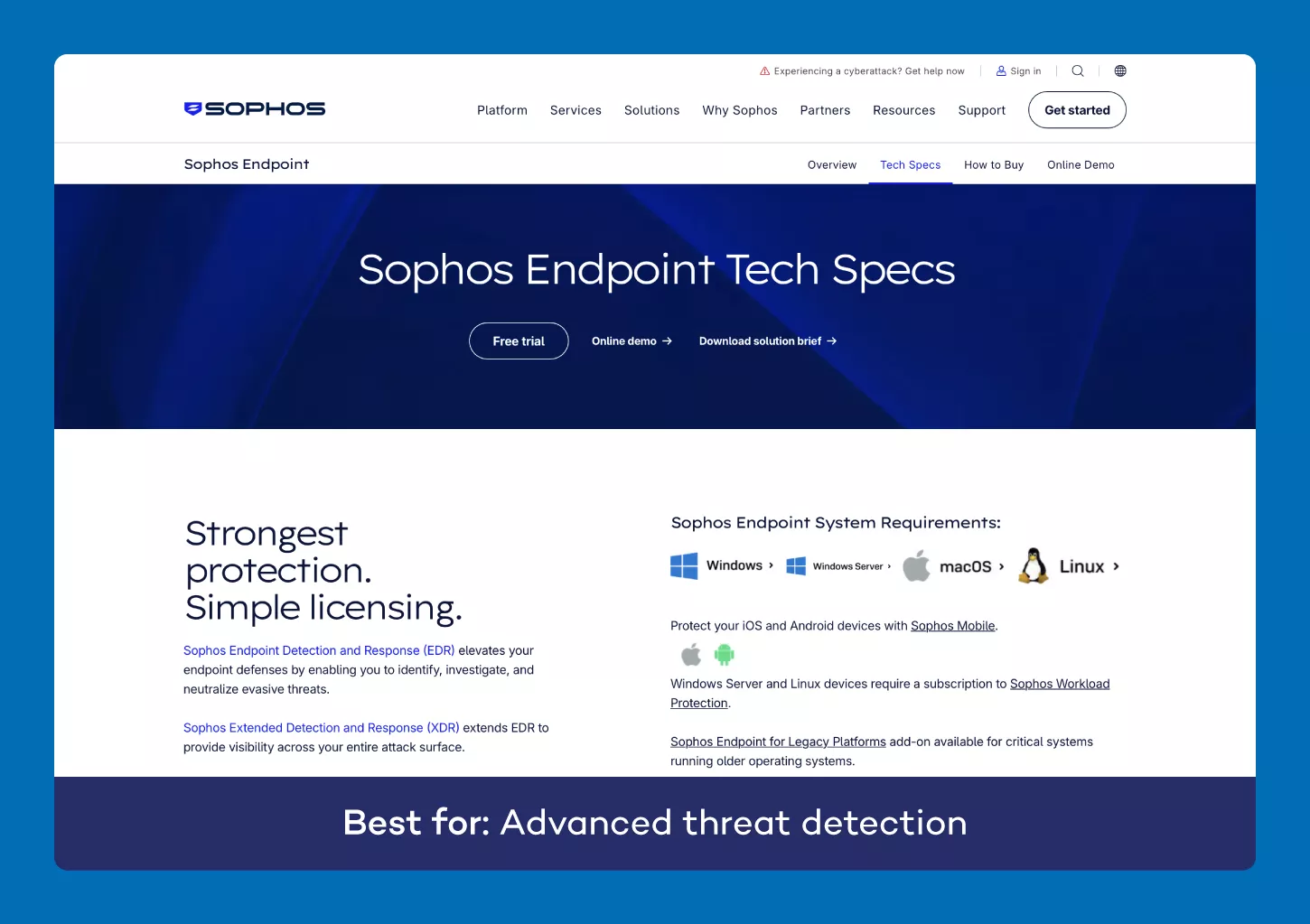
Intercept X stands out for its layered protection. It watches how files behave instead of relying only on known virus signatures. That means it can stop brand-new malware and ransomware attempts early. You can manage everything through the Sophos Central cloud dashboard — monitor devices, respond to alerts and deploy protection remotely.
Users often praise Sophos for its strong threat detection and detailed security insights. Many like the ability to track attacks step by step. That said, the trade-off is complexity. It offers many controls, which can feel overwhelming for small teams. Also, those looking for the best free antivirus software may find Sophos more focused on paid protection.
Key features:
- AI-powered malware and ransomware detection
- Anti-exploit technology that blocks suspicious behavior
- Cloud dashboard through Sophos Central
- Deep visibility into attack chains and system activity
- Remote deployment and policy management for endpoints
Pricing
Intercept X offers custom pricing.
8. Malwarebytes for Teams: Best for Fast Threat Removal
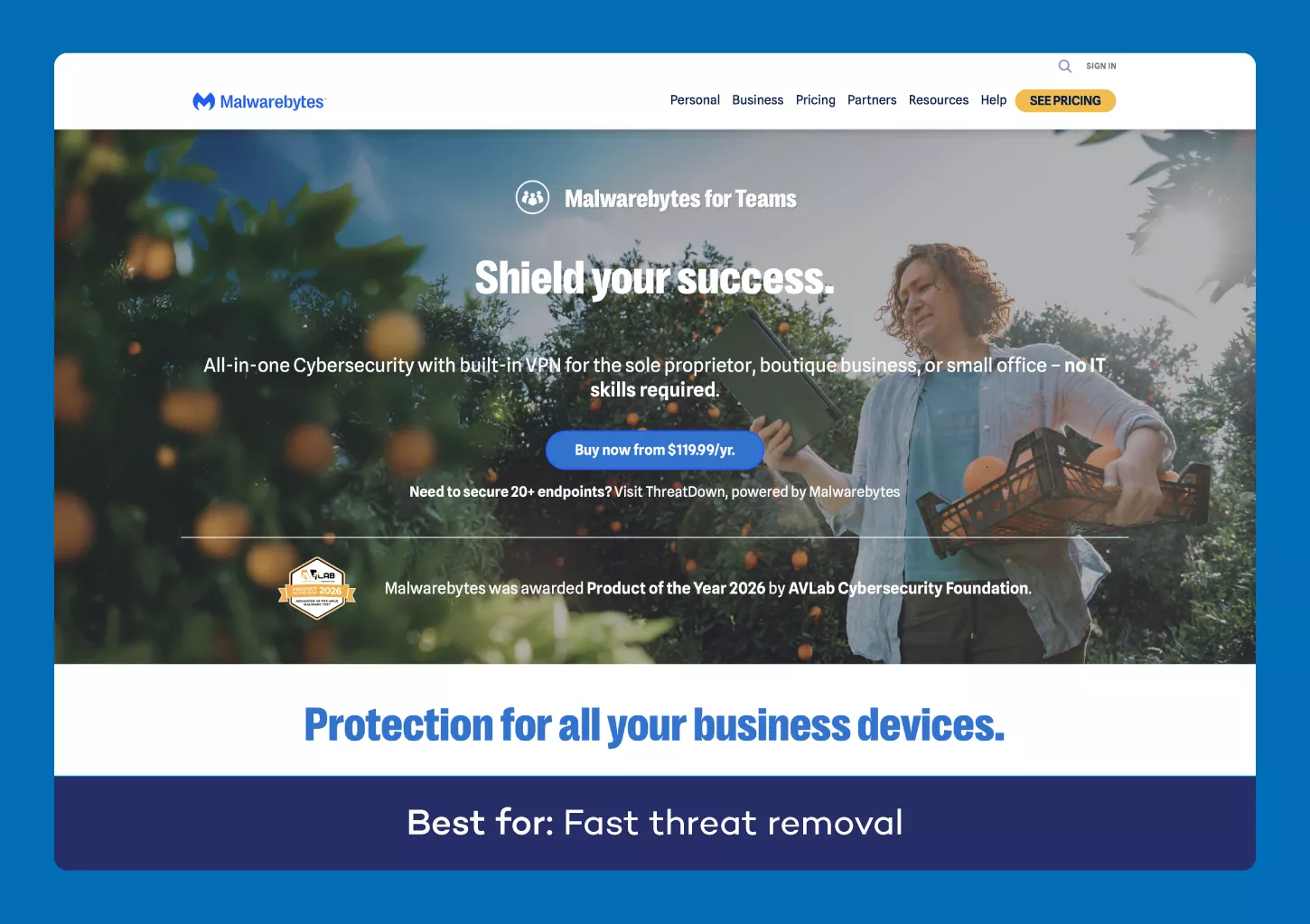
Malwarebytes focuses on behavior-based detection rather than relying only on known viruses. The system watches how programs behave and shuts them down if they act like malware or ransomware. Admins can monitor devices from a cloud console, deploy protection remotely and check threat alerts in real time.
Many users like Malwarebytes for its fast scans and ability to remove stubborn malware that other tools miss. Reviews often highlight the clean interface and simple setup process. The main limitation is that it focuses primarily on endpoint protection, so companies that want a full suite of enterprise security tools may need additional solutions.
Key features:
- Behavior-based malware and ransomware detection
- Cloud console for device monitoring and management
- Fast scanning and threat removal
- Protection against malicious downloads and websites
- Lightweight performance for business laptops
Pricing
Malwarebytes offers three plans for its antivirus solution:
- Small office: $519.99/year for 20 devices
- Boutique business: $319.99/year for 10 devices
- Sole proprietor: $119.99/year for 3 devices
9. ESET PROTECT Enterprise: Best for Lightweight Protection
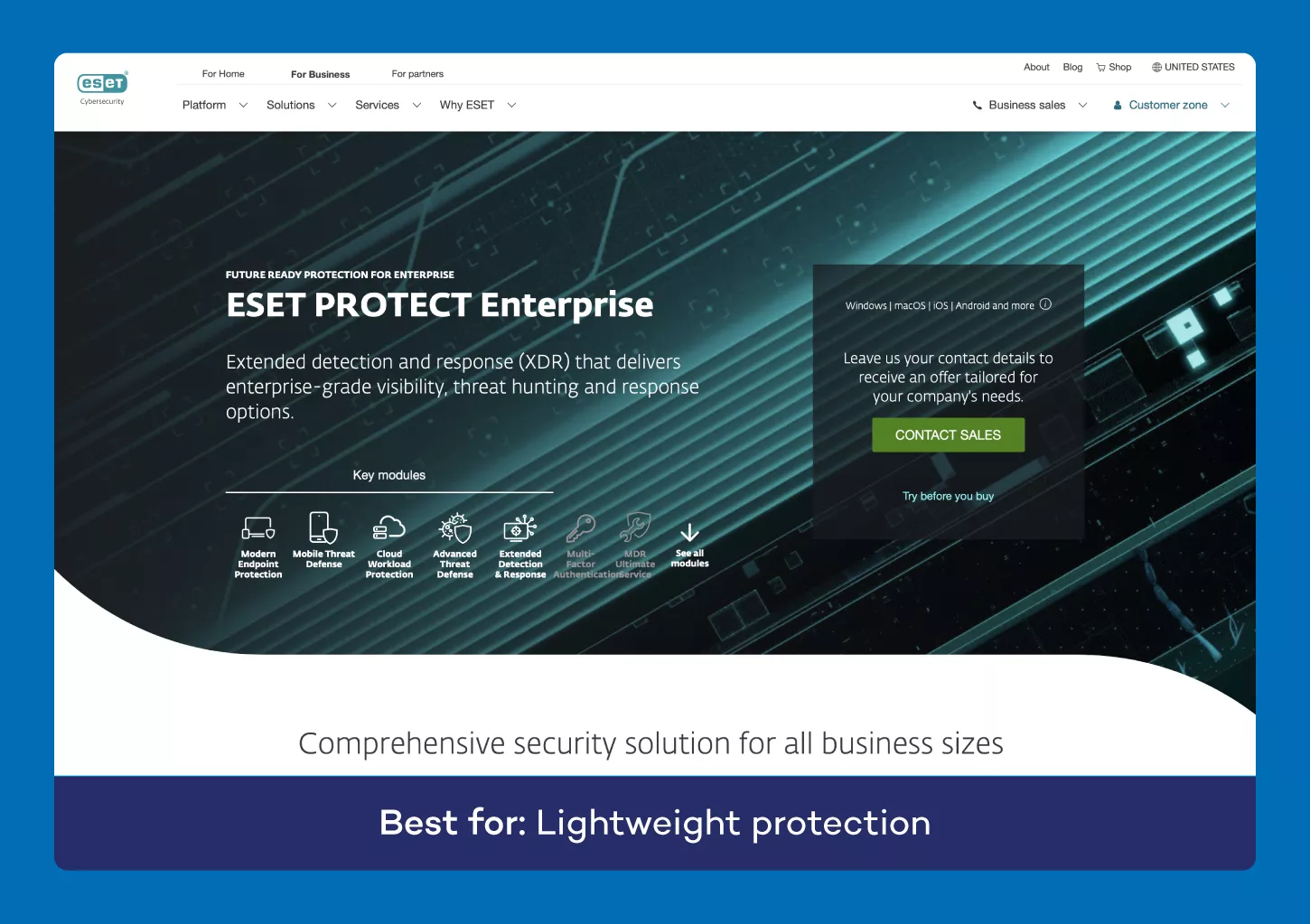
It uses a layered approach to stop malware, ransomware and zero-day attacks. It combines endpoint protection with extended detection and response (XDR) tools, giving you visibility into threats across the entire network. You can monitor alerts, deploy policies and respond to incidents through a centralized console that manages devices remotely.
Many IT teams like ESET for its reliability and low system impact. Reviews often mention strong detection rates and fewer slowdowns compared with heavier security suites. It also supports a wide range of operating systems, including Windows, macOS, Linux, Android and iOS. The main drawback is that its advanced security features can require some technical knowledge.
Key features:
- Multi-layer malware and ransomware protection
- XDR for deeper threat analysis
- Full-disk encryption to protect sensitive business data
- Centralized management console for endpoint monitoring
- A cloud reputation system that scans files in real time
Pricing
ESET PROTECT Enterprise offers custom quotes.
10. CrowdStrike Falcon Go: Best for AI-Powered Threat Detection
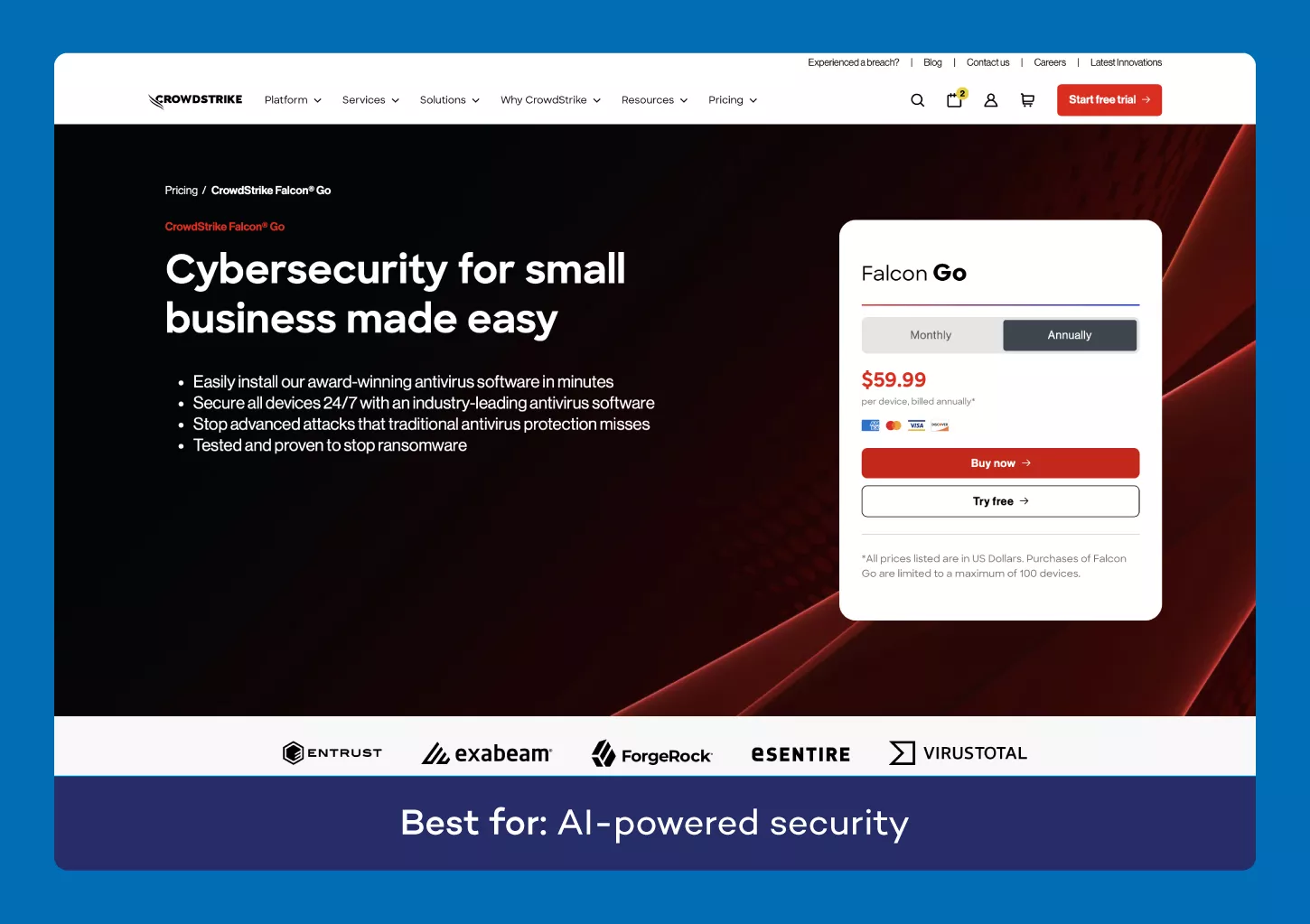
It runs on CrowdStrike’s cloud-native Falcon platform, which continuously monitors endpoints for unusual behavior. Instead of relying only on virus signatures, it uses machine learning to identify new threats and block them automatically. You can install it in no time and protect your devices almost immediately, making deployment simple even for companies with limited IT resources.
Users often like Falcon Go for its strong detection rates and modern approach to cybersecurity. Many businesses also appreciate the clean dashboard and quick setup. The downside is cost: Advanced Falcon tiers can be more expensive than traditional antivirus tools, especially for very small teams.
Key features:
- AI-powered next-generation antivirus protection
- Endpoint detection and response for suspicious activity
- Device control for USB and external devices
- Mobile protection for Android and iOS devices
- Express support for setup and troubleshooting
Pricing
CrowdStrike Falcon Go costs $59.99/year/device.
How to Choose the Best Antivirus for Your Small Business
Hackers frequently target small businesses because they know defenses may be weaker. Phishing, malware and brute force attacks can break into your systems if protection is weak. The best antivirus in 2026 should protect all of your devices while staying easy to manage.
Here are a few key features to look for:
- Compatibility with your tech stack: Your antivirus should work smoothly with the systems your team already uses. That includes Windows and macOS laptops, Android and iOS phones and sometimes servers. Good compatibility prevents software conflicts and makes deployment easier.
- Centralized management console: This is a dashboard where administrators manage security for every device in one place. From here, you can deploy updates, run scans and view alerts across the company.
- Ransomware protection: Ransomware encrypts files and demands payment to unlock them. Modern antivirus tools watch for suspicious behavior, such as programs trying to modify large numbers of files quickly. When detected, the software stops the attack before your data is locked.
- Endpoint detection and response: EDR adds deeper visibility into what’s happening across company devices. It monitors system activity, flags unusual behavior and helps your security teams investigate potential attacks.
- Phishing and email protection: Many attacks start with a fake email or a malicious link. Antivirus tools with web and email filtering can block dangerous attachments, phishing pages and infected downloads before your employees interact with them.
- Real-time protection and regular scans: Real-time monitoring checks files and programs as they run. Scheduled scans add another layer by reviewing the system for hidden threats that may have slipped through earlier.
- Good customer support and onboarding: This is a game-changer for businesses that don’t have dedicated IT teams. Clear documentation, guided setup and responsive support can make a big difference when deploying security software.
- Scalability: As your business grows, your antivirus should keep pace. Look for solutions that allow you to add users or devices easily without reinstalling the system or changing platforms.
How to Use Antivirus to Protect Your Small Business
Installing or purchasing an antivirus is only the first step. To get the maximum protection, you need to deploy it properly and manage it across all devices. A simple process helps keep every system secure — from office desktops to laptops running the best antivirus for Windows 11 or any other operating system.
Follow these steps to use antivirus software effectively:
- Assess your cybersecurity vulnerabilities: Identify where your business may be exposed. Look at how employees access files, what data is stored on company systems and how often downloads or email attachments are opened. This helps you understand what threats your antivirus must handle.
- Review the devices your team uses: List all devices used in your business — desktops, laptops, servers and mobile phones. Decide how many endpoints need protection and whether remote employees need mobile security too. Also, remove older antivirus programs to avoid software conflicts.
- Choose the right antivirus solution: Select software that supports your operating systems and protects all endpoints. Look for features like centralized management, ransomware protection and real-time monitoring so your team can manage security easily.
- Plan a testing timeline with free trials: Many antivirus tools, such as Panda Dome, offer free trials. Use this time to check system performance, confirm compatibility with business apps and test the management dashboard before committing.
- Deploy protection across all devices: Install the antivirus on every company device and enable automatic updates. This ensures new threats are detected quickly as malware definitions are updated.
- Enable real-time monitoring and scheduled scans: Turn on real-time protection so files and downloads are checked instantly. Schedule regular scans to catch hidden threats that may not appear immediately.
- Train employees on safe security habits: Remind employees to avoid suspicious links, downloads and attachments. Even the best antivirus software works better when users follow basic cybersecurity practices.
Additional Cybersecurity Layers for Your Business
Antivirus programs are a strong first line of defense, but modern cyberthreats often require more than one security layer. The do’s and don’ts of cybersecurity for your business often come down to adding a few extra protection layers around your systems and employees.
Here are some options to strengthen your overall security:
- Firewall protection: Firewalls monitor incoming and outgoing traffic and block suspicious connections. Most Panda Dome plans include a built-in firewall to help protect business networks from unauthorized access.
- Email filtering and protection: Many attacks start in the inbox. Email protection tools scan messages, attachments and links to block phishing attempts, malware and spam before they reach employees.
- Employee cybersecurity training: Employees are often the first line of defense. Training helps teams recognize phishing emails, suspicious downloads and other common attack tactics.
- Regular updates and patch management: Keeping operating systems and applications updated helps close security gaps that attackers often exploit.
- Password management: Weak passwords make it easier for attackers to break into systems. Tools like Panda Dome Password Manager help you create strong passwords and store them securely.
Combining antivirus with these additional protections helps build a stronger security foundation for your business.
Protect Your Business With Panda Security
Your small business is a lot like neighborhood shops. You lock the front door at night, but you also install cameras, alarms and better lighting. And cybersecurity works the same way. The best antivirus for small businesses protects the door, the windows and everything inside, without turning security into a full-time job.
And Panda Dome can make this simpler for you. It combines antivirus protection with tools like a built-in firewall that monitors and filters network traffic to block unauthorized access. It also includes extras like a password manager that securely stores and generates strong passwords so your teams don’t reuse weak credentials.
Explore plans and features to find the protection that fits your business and helps you keep it safe.
Small Business Antivirus FAQ
Choosing the right security tool can raise a lot of questions. Below are quick answers to common concerns business owners have when deciding which antivirus is best for a small business.
Can I Use a Consumer Antivirus for My Business?
Consumer antivirus protects individual devices, while business antivirus is designed for multiple users and centralized control. Business solutions often include device management, policy controls and reporting dashboards that consumer versions lack. Using consumer licenses in a company environment can also violate licensing terms.
How Often Should I Run a Full System Scan?
You should run a full system scan once a week or at least once a month. Real-time protection already monitors files and activity continuously, but scheduled deep scans help detect dormant or hidden malware that may slip past routine checks.
Does Business Antivirus Slow Down Computers?
Older antivirus programs were known for heavy scans that slowed systems. Modern solutions use cloud-based threat intelligence and lightweight agents, which reduce CPU usage during scanning. Most business antivirus platforms now run quietly in the background without noticeable performance issues.
What’s the Difference Between Per-Device and Per-User Licensing?
Per-device licensing protects a specific number of devices, such as laptops, desktops or servers. Per-user licensing covers a specific employee and allows that person to secure multiple devices, like a work laptop and phone.
What’s the Difference Between Antivirus and EDR?
Antivirus focuses on preventing and blocking known malware and suspicious files. Endpoint detection and response (EDR) goes further by monitoring system behavior and investigating suspicious activity across devices. EDR tools provide deeper visibility into attacks and help security teams respond to threats after they appear.
Do I Need an Antivirus if I Use Cloud-Based Software Like Google Workspace or Microsoft 365?
Yes, cloud platforms secure their infrastructure, but they don’t protect your individual devices. If malware infects an employee’s computer, it can still access files, emails and cloud accounts from that device.
Do Macs Need Antivirus Software for Business Use?
Yes, while macOS includes built-in protections, Mac devices can still be targeted by malware, phishing attacks and credential theft. Businesses that use Macs should still deploy antivirus software to protect data, monitor threats and maintain consistent security across all endpoints.
What Happens If an Employee Brings In a Personal Device?
Personal devices can introduce security risks if they connect to company networks without protection. Many businesses use endpoint security policies or mobile device management tools to ensure personal devices meet security standards before accessing company systems. This helps prevent malware from entering the business environment.