


AI has changed everything and turned the landscape upside down. In my day-to-day role as Global Consumer Operations Manager at Panda Security, I see firsthand how this technology has redefined cybersecurity for SMEs. On one hand, it optimizes cybercriminals’ processes by allowing them to automate attacks against small and medium-sized businesses, identify vulnerabilities at lightning speed, and customize entry points. On the other hand, it equips SMEs with advanced detection and mitigation capabilities that were previously out of reach due to cost.
A lack of budget, specialized personnel, and proper tools has traditionally left SMEs in a vulnerable position. Today, I observe attackers using AI to analyze networks, exploit vulnerabilities, and execute mass credential theft. Understanding how these techniques work is the essential first step to stopping them.
How AI Is Transforming Cyberattacks
In recent months, I have verified that artificial intelligence has not only increased the volume of cyberattacks. But also drastically reduced their execution time. Where preparing a malicious campaign once required high technical expertise and significant time, today’s generative AI tools allow attackers to launch highly convincing attacks at unprecedented speed.
Hyper-Personalized Phishing and Deepfakes
Social engineering deception has become far more sophisticated. By leveraging large language models and generative artificial intelligence, cybercriminals craft emails, messages. And even conversational bots that are nearly impossible to distinguish from legitimate communication. Compounding this threat is the use of deepfakes, which can impersonate the voice or image of executives and suppliers to authorize fraudulent wire transfers or request access credentials.
Privacy Risks in AI Assistants
Integrating AI assistants into daily business operations has introduced a major risk: data privacy loss. In many organizations, I see employees interacting with these tools by sharing confidential data or sensitive customer information without considering the consequences. Without strict security configurations on these platforms, data remains exposed to potential leaks or inclusion in external model training.
Prompt Injection and Password Vulnerabilities
One of the emerging threats we monitor most closely is Prompt Injection, where attackers feed malicious instructions into AI models to manipulate them and extract confidential data. Additionally, attackers leverage AI to test millions of password combinations and crack credentials at record speeds, turning weak passwords into a company’s most vulnerable link.
5 Key Strategies to Strengthen Your SME’s Security
To defend against automated AI cyberattacks, SMEs don’t need massive capital investments—they need a clear action plan. The key to protecting a small or medium-sized business lies in prioritizing measures that eliminate common risks immediately.
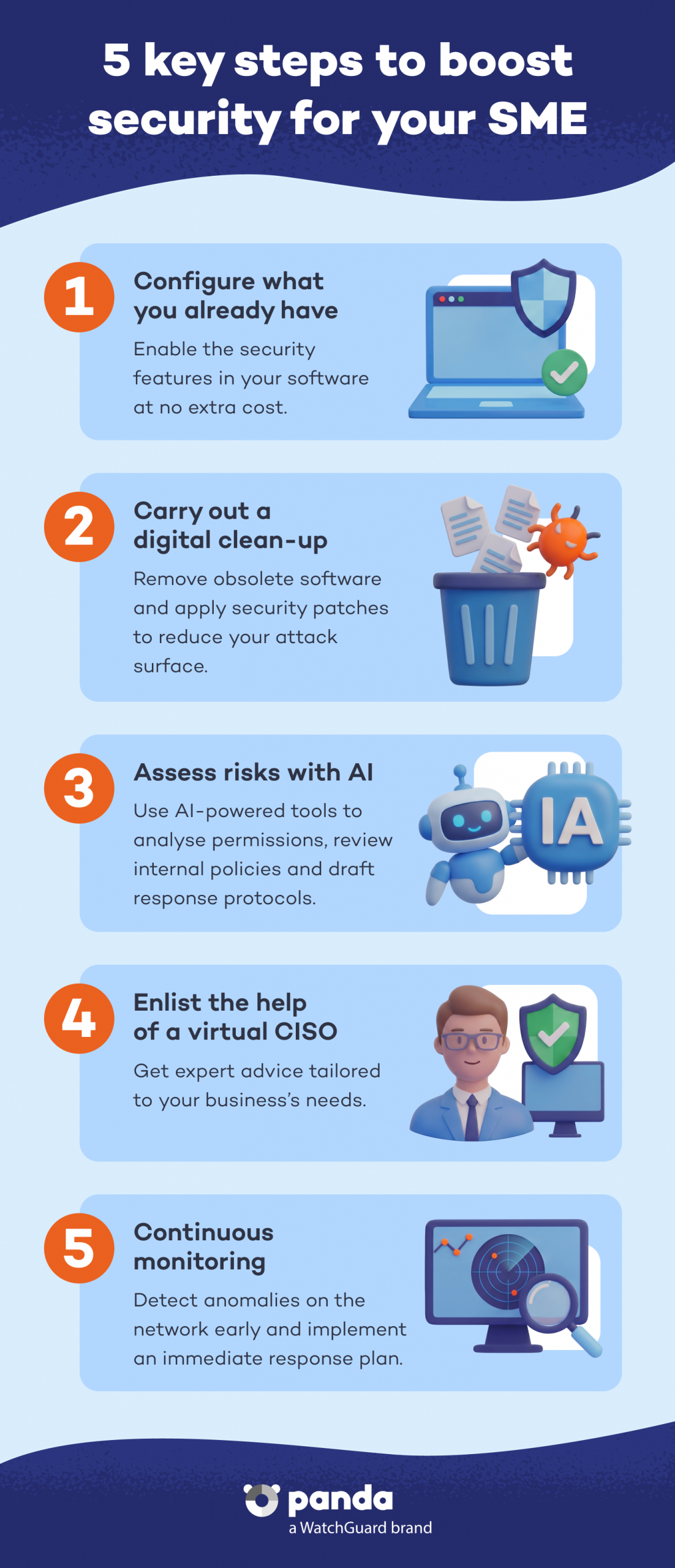

Activate and Configure Existing Security Features
Much of the software and infrastructure already used by SMEs includes advanced protection features that remain inactive. Activating multi-factor authentication (MFA), restricting data access permissions. Or utilizing the built-in security software on existing endpoint devices costs nothing extra. And stops the vast majority of cyberattacks.
Conduct Digital Housekeeping: Remove Obsolete Systems and Pending Patches
Outdated software and legacy operating systems represent one of the primary entry routes exploited by cybercriminals. Removing obsolete software and staying up to date with security patches drastically reduces your business’s attack surface.
Use AI Assistants to Evaluate Risks and Security Policies
AI tools aren’t just for attackers; SMEs can also harness them to strengthen their defenses. Using an AI assistant to review internal policies, detect security gaps, or draft incident response workflows enables rapid decision-making and vulnerability patching without needing in-house specialists.
Rely on a Virtual CISO (vCISO)
Hiring a full-time Chief Information Security Officer is usually beyond the reach of most SMEs. A Virtual CISO model allows small businesses to access expert guidance, design an effective cybersecurity strategy, and oversee regulatory compliance under an external service tailored to their budget and scale.
Continuous Monitoring and Rapid Incident Response
Protecting a business requires ongoing vigilance. Implementing monitoring systems allows companies to spot anomalous network behavior before it causes severe damage. It is equally critical to establish an incident response plan detailing immediate steps to contain attacks, isolate affected systems, and restore operations quickly.
Core Controls That AI Cannot Replace
Although artificial intelligence optimizes attack detection and response, I always emphasize that cybersecurity relies on maintaining a solid foundation of essential controls. Without basic preventive measures properly in place, AI tools lose much of their effectiveness.

Unique Passwords and Password Managers
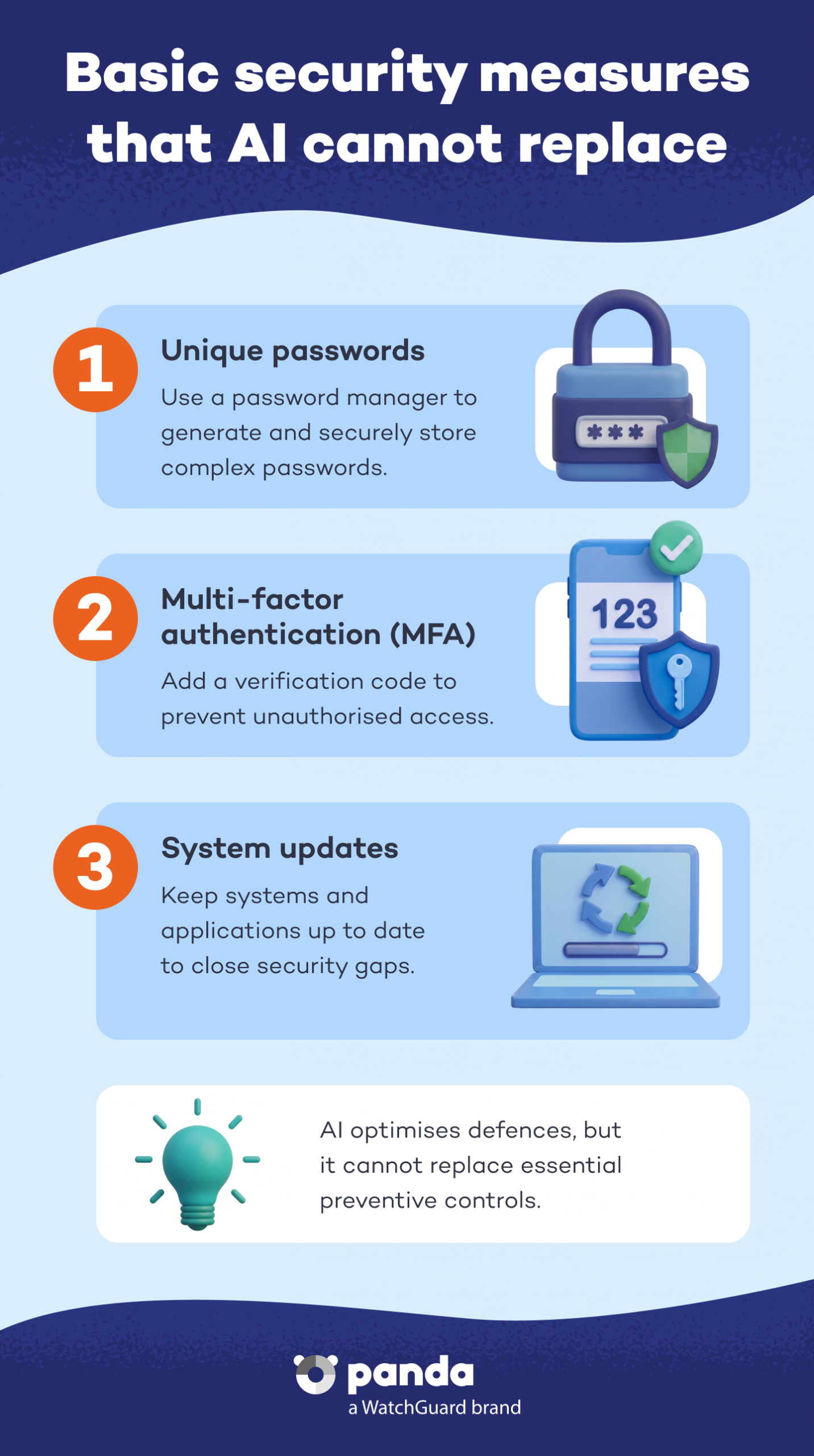
The reality is that we keep making the same old mistakes. A password is the front door key to your digital home; if it is weak or reused across multiple services, your business remains wide open to intrusion. Deploying a password manager like Panda Dome allows organizations to generate and store complex, unique credentials securely, closing one of the primary attack vectors.
Multi-Factor Authentication (MFA)
A password alone is no longer enough. Multi-factor authentication adds an extra verification layer via temporary passcode, preventing unauthorized access even if credentials are compromised. We have made great progress as more services make MFA mandatory, but is it enough? MFA stops the majority of automated attacks, but it must always be paired with strong passwords and employee security awareness.
Operating System Updates
Security patches fix vulnerabilities identified by vendors across software and devices. Keeping operating systems and applications continuously updated prevents attackers from exploiting known security holes to break into your network.