


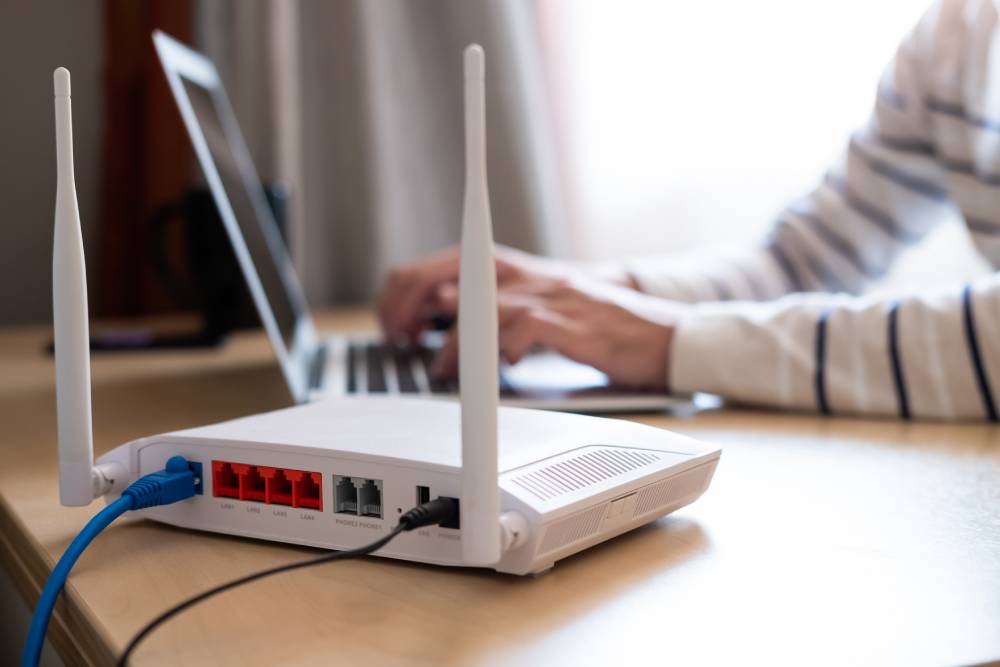
Have you ever wondered what the box your internet provider gave you actually does, or why there seems to be two of them? Understanding the difference between a modem and a router clears up a lot of confusion about how the internet works in your home. This article explains what each device does, how modems date back to the earliest days of the internet, and why both are still essential today, even if you can’t always see them.
Key takeaways
- A modem translates internet signals from your provider into data your devices can use.
- A router distributes that connection to multiple devices.
- In most modern homes, modem and router are combined in a single device.
- Your smartphone also has a modem built in.

What is a modem?
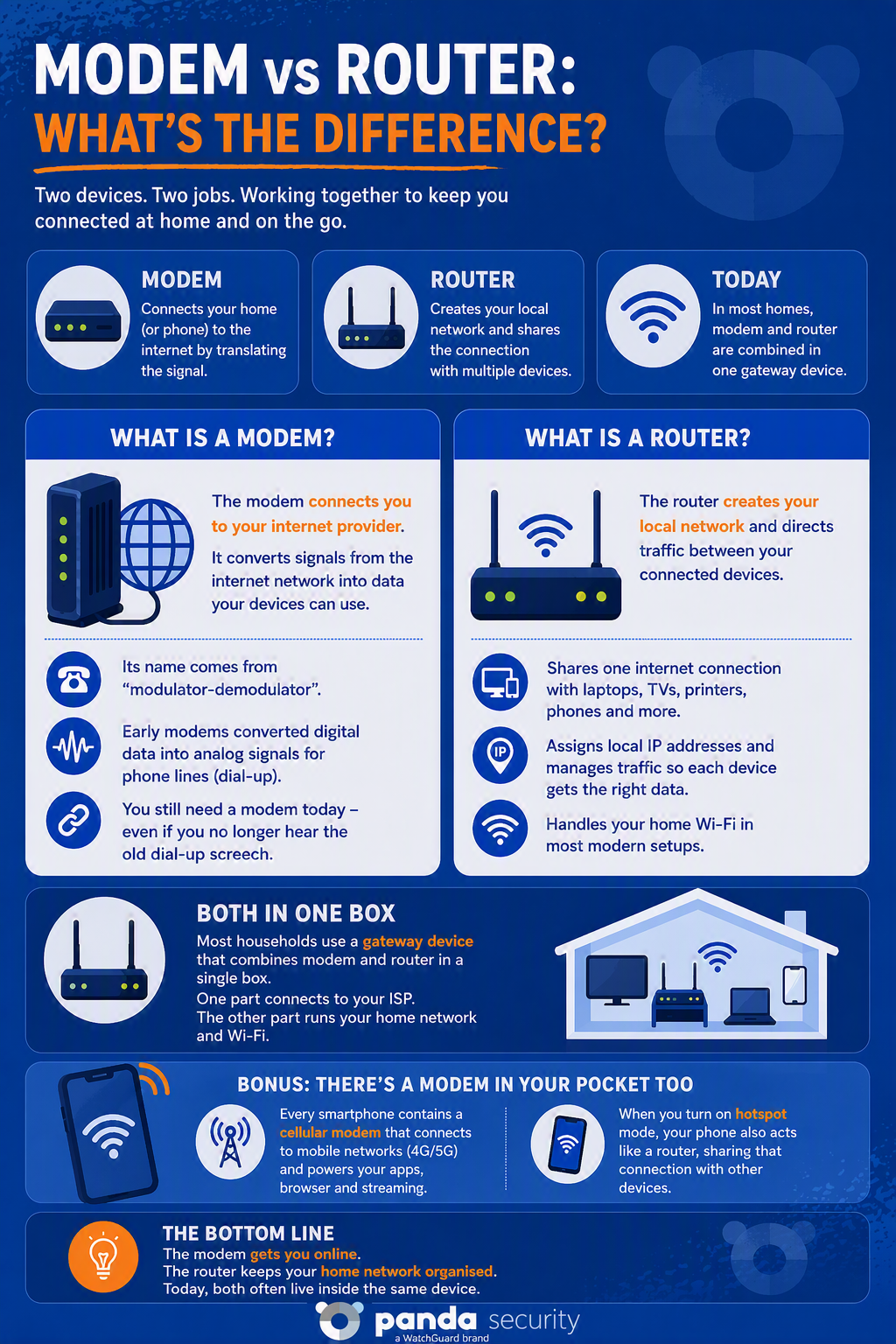
A modem is the device that connects your home or phone to an internet network by translating signals into a format the network can use. The word comes from “modulator-demodulator,” which describes its core job of converting data for transmission and then converting it back again.
In the early days of the internet, this meant turning digital computer data into analog signals that could travel over ordinary phone lines. A process we used to call ‘dial-up’.
Without a modem, your computer had no way to speak the language of the telephone network.
The trouble with dial-up
Before broadband, before fiber, and before Wi-Fi, the modem was the only way ordinary people could get online. You used your telephone line, the modem dialed a number, and then it negotiated a connection with your provider before any web browsing could begin.
The experience was slow by modern standards, but it opened the door to home internet long before always-on broadband became common. The familiar screeching handshake sound was the audio proof that two modems were agreeing on how to communicate.
Why modems still matter
The switch to always-on broadband means we no longer hear the iconic screeches and hisses as our computers connect to the network. But even now, we still need modems to get online – because we still need to modulate and demodulate data.
What is a router?
A router is very different. Where a modem bridges your home to the internet, a router creates the local network inside your home. It is responsible for directing demodulated data between your laptop, smart TV, printer, and every other connected device. It assigns each device its own local IP address and manages traffic so everything receives the right data at the right time.
Today, most households use what’s called a gateway device. A single box that contains both a modem and a router. The modem component handles the connection to your ISP, while the router component handles your home network and Wi-Fi. This is why your internet provider typically sends you one device that does everything.
You can’t see or hear it anymore, but the modem is still a crucial part of your home internet connection.
Bonus – there’s a modem in your pocket too
It’s easy to think of modems as something that belongs on a desk or shelf, but every smartphone you’ve ever owned contains one. The cellular modem inside your phone connects to your carrier’s mobile network, translating 4G or 5G signals into the data your apps, browser, and streaming services use. Again, you can’t see or hear it, but the modem is there doing a vital job.But wait, there’s more! Your smartphone also offers router-like functionality. When you turn on your phone’s hotspot it allows other devices to share its modem connection. The in-built router takes care of making sure the correct web traffic is directed to each device connected to the hotspot.
Modems demystified
The simplest way to remember the difference is this: the modem gets you online, and the router keeps your home network organized. Dial-up modems were once the only way into the internet, and while the connection methods have changed, the modem has not disappeared. It now often hides inside your router, and quietly powers your mobile connection all day, every day.