


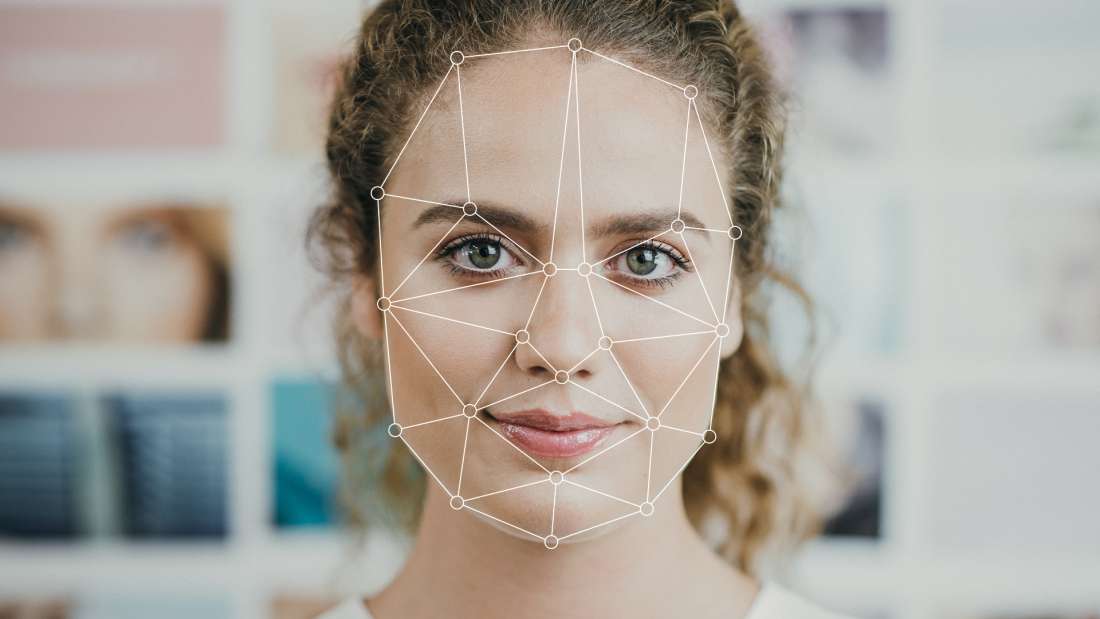
Facial recognition stages
- The camera detects a face in the frame, often from multiple angles.
- Deep learning tools analyze it to measure unique features, such as the distance between the eyes and the shape of the cheekbones.
- Facial recognition software converts your facial analysis into a unique mathematical code, or faceprint, for security.
- The formula is compared to other faceprints to find a match.
Facial recognition makes our lives more convenient at the cost of privacy, but some have concerns
The biggest companies know this, which is why Business Insider speculates that Meta (known for Facebook) announced facial recognition for its Ray-Ban Smart Glasses during this tumultuous time to avoid the public scrutiny of having even more invasive data collection.
Read on to learn more about what facial recognition is, how it works, where to find it, and how to protect your facial data.
What Is Facial Recognition Technology (FRT)?
FRT analyzes your facial features and matches them against information in a database to identify you. Unlike the face detection tools on your phone, this tech can connect your face to a user profile that contains additional, private information.
Grand View Research expects the facial recognition industry to reach $15.84 billion by 2030. Much of this growth is in North America, where organizations and governments use it to track when people arrive in the country, control access to sensitive areas and provide other security solutions. You can also find it on your smartphone, helping you unlock your device.
Facial Recognition in Four Steps
Organizations sometimes vary in how they use facial recognition, but all follow some form of these steps:
Step One: Face Detection
The camera starts with face detection, similar to face tracking on your smartphone. Modern technology can track faces from multiple angles, which is why facial recognition apps ask you to slowly rotate your head when taking a picture.
Step Two: Face Analysis
Next, a photo of the face is captured and analyzed. Modern detection tools use deep learning tools, such as convolutional neural networks (CNNs), that mimic how humans perceive faces. These tools can analyze the distance between your eyes or the shape of your cheekbones.
Step Three: Converting An Image to Data
Facial recognition systems transform the analysis into a “faceprint,” a unique numerical code to compare against their internal database. It’s a kind of ID number that’s similar to your thumbprint or signature.
Step Four: Finding a Match
Your code is then compared against a database of other faceprints to compare it with other photos.
In the wrong hands, this four-step process could become dangerous, as security software becomes a one-stop shop for anyone who wants to use your face to collect personal information and steal your identity. Cybercriminals can also leak it to criminal forums, so consider dark web monitoring tools to track any exposures.
Where Is Facial Recognition Used?
While facial recognition may seem futuristic, governments and businesses currently use it in a variety of ways. Here are some examples of facial recognition in action:
- Device security: Some apps use facial recognition to limit access to your data. They require your face to unlock your smartphone, going beyond what a secure password alone can do.
- Predicting genetic disorders and diseases: Harvard’s FaceAge algorithm uses photos to determine a person’s biological age, transforming selfies into diagnostic tools.
- Shoplifting prevention: The grocery store Wegmans uses facial recognition to identify “persons of interest” for surveillance of potential shoplifters.
- Banking security: Banks like Wells Fargo use facial recognition instead of a username and password to log into banking apps and access accounts.
- Workspace access and job screening: Companies like Intuit and HireVue use facial analysis and recognition to manage employees and screen job applicants.
With widespread adoption, many have shared their concerns about racial bias present in facial recognition software. One paper found that adaptive brightness adjustment reduces potential bias by nearly 75%. As facial recognition evolves, companies are encouraged to take steps to address bias in their systems.
Facial Recognition Privacy Risks
Many industries have implemented facial biometric scanning into their everyday operations. Here’s why some remain hesitant to adopt these progressive technologies:
- Mass data collection: Clearview AI, a facial recognition company, has a database of 30 billion faces. In response, 23 states have filed an appeal with the Seventh Circuit Court to remove this data and “protect Americans’ privacy.”
- Data breaches: Outabox, an Australian facial recognition firm used in clubs, exposed one million facial records from 19 locations in New South Wales.
- Lack of consent: Organizations sometimes monitor public spaces with facial recognition software to track people without their knowledge.
Not only do private entities have access to the data, but many facial recognition databases are public. Anyone, even cybercriminals, can find you in the database and bypass systems that require your face to get through.
How to Protect Your Biometric Data
While your facial data is out there, there are steps you can take to limit data collection and hold info-collecting groups accountable:
- Know your state’s surveillance laws: Nearly 15 states have laws that limit how law enforcement agencies and organizations use or collect biometric data. Look up your state’s legislation to find out how you can hold these groups accountable.
- Opt out of photos at U.S. Customs: You can decline to provide information to U.S. Customs and Border Protection (CBP) by opting out. If you’re at an airline, you’ll need your physical passport ready and may have to go through some questioning.
- Stop tagging photos on social media: Companies like Facebook and Google build their own facial recognition databases from photos consumers voluntarily tag on their apps. Untag yourself from photos and block future tags (and make your account private) from your settings.
- Physical concealment: Wear large hats and sunglasses with infrared-blocking capabilities to limit public data collection. Cloth or surgical masks can also hide your face, but check whether local laws restrict their use in public areas.
- Opt out of data collection: Companies like Clearview AI let users opt out of information collection. If you know your face is in a company database, check whether they have an opt-out form.
- Consider image cloaking tools: Tools like Fawkes make small alterations to make tracking you harder. While these won’t protect you in public, they could help if your information is exposed on social media.
- Remove your information from the internet: Opt out of data brokerage sites that collect and sell your photos. You can fill in the opt-out forms on each site or use data removal tools like DeleteMe.
Protect Your Data with Panda Security
As facial recognition technology continues to evolve, we can expect more discussions about privacy and cybersecurity. Cybercriminals can use this information to find you and target your device, making antivirus software incredibly important.
Thankfully, you don’t have to pay for premium protection to start.
Panda Dome’s free antivirus relies on real-time, behavioral detection to help prevent malware from targeting your device. It even detects when you visit unsafe sites that try to collect your biometric data, blocking them so your information doesn’t end up in the wrong hands.
Download it today to learn how this free antivirus offers premium protection for your device’s data.
Facial Recognition Technology FAQ
Facial recognition software is simple on the surface, but it gets more complicated when it comes to privacy and security concerns. Read these questions and answers to learn more.
Is facial recognition an invasion of privacy?
Facial recognition software can be an invasion of privacy because it enables mass surveillance without consent. It allows governments and organizations to threaten anonymity in public spaces by relying on a database of biometric information you may not want to share.
How accurate is facial recognition technology?
The latest figures show FRT achieving over 99.95% accuracy according to the National Institute of Standards and Technology (NIST).
How can I find out if my face is in a facial recognition database?
Use reverse face search engines like FaceCheck.ID or PimEyes to find your face on facial recognition databases. These tools can also determine whether cybercriminals are using your photos to impersonate you on fake social media pages.
Can cybercriminals exploit facial recognition for identity theft?
Yes, cybercriminals can use your pictures to access online accounts protected by facial recognition systems. AI deepfakes compound the problem further by duplicating your face entirely, fooling your friends and family members into providing information in phishing scams.
Additional sources: